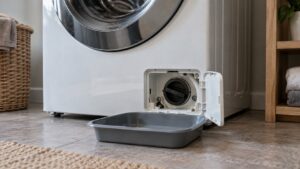

KitchenAid washer repair costs vary based on the failed component, whether the machine is a top-load or front-load design, and how much disassembly the repair requires. Simple part swaps like a drain pump or a door latch are typically the most affordable repairs, while bearing replacements and main control board failures land at the higher end. Front-load washers in particular can involve more labor for certain repairs because the drum assembly, bearings, and suspension system are more complex than a traditional top-load design, so getting an accurate number requires an in-person diagnosis rather than a phone estimate.
Understanding the Kitchenaid Washer Repair Costs
Below, our specialists break down everything you need to know about the Kitchenaid Washer Repair Costs.
How Washer Repair Pricing Is Determined
A washer repair quote reflects two combined costs: the part itself and the labor required to reach and replace it. Some components, like a lid switch or a water inlet valve, are positioned for relatively easy access and quick replacement. Others, like a drum bearing or a rear tub seal on a front-load washer, require substantially more disassembly — sometimes removing the entire drum from the cabinet — which increases labor time significantly. The type of washer also matters: agitator-style top-load machines have fewer moving assemblies than direct-drive front-load units with a suspension system, shock absorbers, and a counterweight.
Typical Cost Tiers by Repair Type
Lower-cost repairs from $ usually cover lid switches, drain hoses, water inlet valves, and door latches — parts that fail from routine wear and are straightforward to access. Mid-range repairs from $ often involve drain pumps, drive belts, and door boot seals on front-load machines, since these require partial disassembly of the cabinet or front panel. Higher-cost repairs from $ typically point to a main control board, a drive motor, or a tub bearing and seal kit, all of which demand more labor time and, in bearing cases, specialized tools to press old bearings out and new ones in without damaging the tub.
Why Front-Load and Top-Load Costs Differ
Front-load KitchenAid washers use a suspension system with springs or shock absorbers to control drum movement during the high spin speeds needed for water extraction. When these wear out, the washer may develop a loud banging noise during spin, and the repair involves removing the front panel and sometimes the drum itself to access the suspension components. Top-load washers with a more traditional transmission and agitator design tend to have simpler, more accessible mechanical layouts, which is often reflected in lower labor time for comparable failures. Neither design is inherently more or less reliable — the cost difference is purely about access and disassembly complexity.
Symptoms That Signal a Bigger Repair
A washer that vibrates excessively, will not spin, or leaks from underneath during the wash cycle can point to several different root causes, ranging from something as simple as an unbalanced load or unlevel feet to something as involved as a failed bearing or a cracked tub. Left unaddressed, a failing bearing can eventually seize and damage the drive motor or transmission, turning a moderate repair into a major one. This is exactly why a proper diagnostic inspection — checking the drum for play, listening to the noise pattern, and testing electrical components — is worth doing before assuming the worst or the best.
Preventive Habits That Limit Repair Costs
A number of washer repairs stem from preventable causes rather than pure component wear. Overloading the drum puts extra strain on the motor, belt, and suspension system, while consistently using too much detergent can leave residue that clogs the drain pump and hoses over time, eventually triggering a drainage failure that looks like a pump problem but is really a maintenance issue. Leaving the door or lid open between loads on front-load machines helps prevent mold and odor buildup in the door boot seal, extending its life. None of these habits guarantee a washer will never need repair, but they measurably reduce how often expensive components like the pump, motor, and suspension system are put under unnecessary stress.
Getting an Accurate Quote
Because washer symptoms so often overlap, the most efficient path to a real number is a diagnostic visit. Our technicians inspect the drum, suspension, pump, and control board before quoting a firm part-and-labor price, so there are no surprises. For more on evaluating whether repair still makes sense for an older unit, see our washer repair-or-replace guide, and for troubleshooting a specific symptom first, check our washer not spinning guide. Current KitchenAid washer models and specifications are available at kitchenaid.com.