
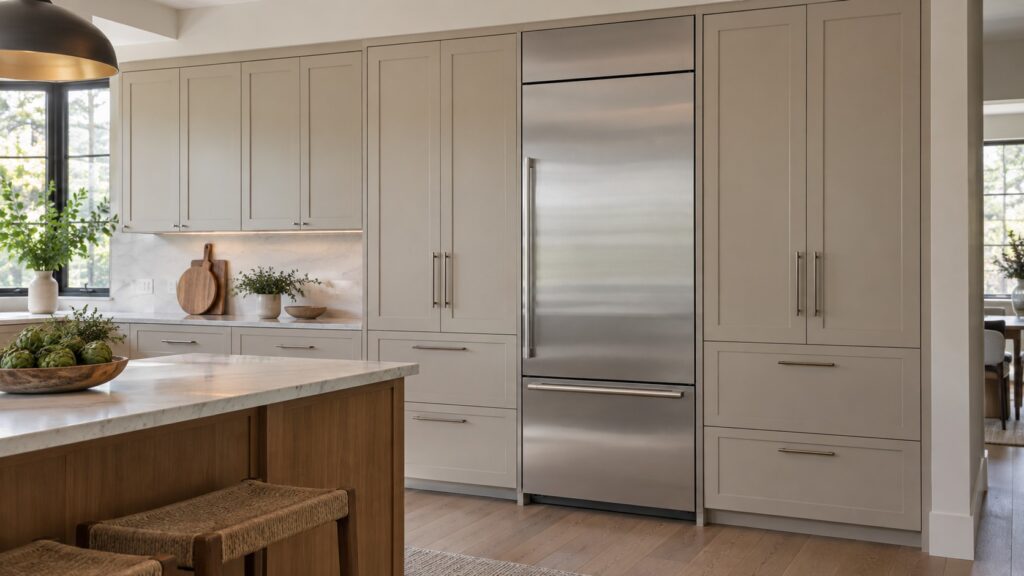
The KitchenAid kbbl306ess is a 20.9 cubic foot built-in bottom freezer refrigerator with a platinum interior, and almost everything that goes wrong with one in its first year is an installation problem rather than an appliance problem. A built-in column is not a freestanding refrigerator pushed into a gap. It is anchored to the structure, it breathes through the top, it sits flush with the cabinet faces around it, and it is heavy enough that getting it into the opening is a planned operation rather than a shove.
What has to be decided before the opening is built?
Three things, and all of them are expensive to change later. First, the door swing and how far the doors need to open to clear an adjacent wall or a return; a built-in in a corner can end up with a refrigerator door that will not open far enough to pull the shelves out. Second, whether the KBBL306ESS is going in with its own stainless doors or with custom panels, because the panel adds thickness at the front and the opening has to account for it. Third, where the water line and the outlet land, since both have to be in the wall before the cabinet goes up.
If you are still weighing the format itself, built-in versus freestanding refrigeration covers what you are buying into: a built-in trades service access and flexibility for a flush front and a longer expected life.
How much clearance does the KBBL306ESS need, and where does the air go?
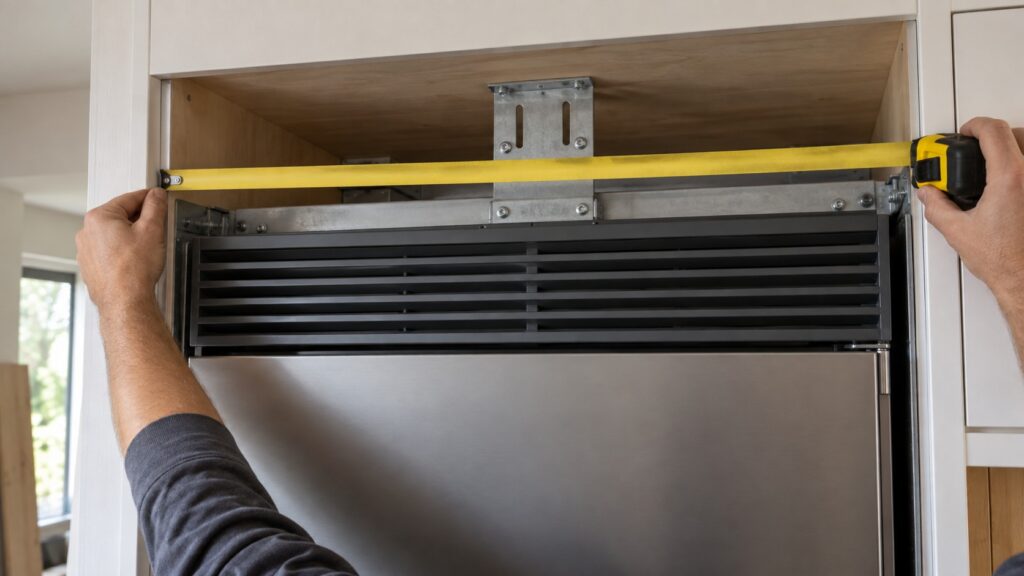
This is where built-in columns are most often gotten wrong, because the intuition from a freestanding refrigerator is exactly backwards. A freestanding unit pushes its condenser heat out the back and needs a gap behind it. A built-in column pulls air in low at the front and exhausts it through the grille at the top, which is why it can sit tight against the cabinet sides and the rear wall.
The consequence is that everything depends on the top. If the grille opening is trimmed down for looks, if a soffit is built across it, if the void above the column is filled with insulation during a remodel, or if the grille is blocked by stored items, the appliance is running in its own exhaust. Build the opening to the dimensions in the instructions, leave the grille void empty, and do not let a later cabinet job close it.
How do you get the unit into the opening without damaging it?
Carefully, and rarely alone. A built-in column of this size is front-heavy with the doors on, so the doors come off first if the instructions allow it, which also drops the width enough to get through a standard doorway. Move it upright on an appliance dolly, keep it upright the whole way, and protect the finished floor with hardboard rather than a blanket that can slide.
- Dry fit the opening. Measure the width at the bottom, the middle and the top. Cabinets go in square and come out of a season slightly not.
- Bring the water and power forward. Have both looped out where you can reach them with the unit half in, because that is the last moment anything behind it is accessible.
- Roll it most of the way in, then stop. Connect the water line and plug the cord before the final few inches.
- Set the height with the front legs. The cabinet must be level side to side and, if the instructions call for it, a fraction high at the front so the doors close under their own weight.
- Anchor the top. Into framing, with the supplied hardware. An unanchored column that is pulled on by a loaded door is a tipping hazard.
Stop before doing your own electrical or plumbing work at the wall. A dedicated circuit and a valved water supply are trade work, and a water line run through a cabinet side without a grommet will chafe through in a few years.
What does the ice maker water line need?
A cold supply with its own accessible shutoff, connected with the line type the instructions specify, and no saddle valve. Run the line so it has a service loop rather than a sharp bend behind the unit, and secure it so it cannot be pinched when the column goes home. Once the KBBL306ESS is set, that connection is behind a cabinet you cannot get into without pulling the appliance out again.
Discard the first few batches of ice. New plumbing carries cutting oil, flux residue and air, and a first harvest that tastes of the line is normal rather than a fault. If the column is being installed alongside a separate undercounter unit, our ice maker installation and setup guide covers the drain and supply requirements that machine adds.
How do the panels and doors get aligned?
Last, and against the cabinets rather than against the appliance. The whole point of a built-in is that the door faces sit in the same plane as the surrounding cabinet doors with an even reveal all the way around. That alignment is done with the adjusters on the hinges and the panel brackets once the column is anchored and level, never by shimming the cabinet afterward.
Work in one direction: set the height of the refrigerator door first, then the freezer drawer below it, then check the reveal between them across the full width. Close both several times. A door that needs a push at the end is not aligned, and on a bottom freezer that misalignment is what produces a drawer that looks shut and is not.
Which codes show up when the installation is wrong?
Three of them, and all three are usually the room rather than the refrigerator. OP is the freezer reporting a door left open, which after a new installation almost always means a drawer that is not quite closing because the column sits low at the front or the panel is fouling a cabinet face. E1 is the freezer temperature too warm, which on a fresh install points first at a blocked top grille and a column running in its own heat. EF is an evaporator fan failure, and while that is a real component code, a cabinet that has been fighting restricted airflow for months is where fans wear out early.
Give a newly installed column a full day before judging any of it. A 20.9 cubic foot cabinet that was loaded warm takes many hours to pull down, and a temperature complaint on the first evening is usually just the appliance doing its job. Once it is running, our freezer maintenance guide covers the gasket and grille checks that keep these three codes away.
We are an independent repair company, not a factory service arm. Pricing starts from a diagnostic visit and we confirm the estimate before any work begins. KitchenAid freezer repair covers doors, fans and sensors on built-in columns, and you can schedule a visit online or call 1-844-755-8060.