TL;DR: The drain pump filter on a KitchenAid washer is a small trap in front of the pump. It catches lint, coins, hair clips and scraps of fabric so they do not jam the pump impeller, and when it clogs the washer cannot empty the tub in time and shows F21. Cleaning the KitchenAid washer drain pump filter takes about fifteen minutes. Unplug the washer, close the water valves, set a shallow pan under the access panel, unscrew the filter slowly and rinse it clean.
What does the drain pump filter do in a KitchenAid washer?
When the wash and rinse stages finish, the drain pump pushes the used water out through the drain hose. Everything that was loose in the tub travels with it: lint, fibers, a loose button, the coin that was in a pocket, a hair clip that slipped out of a sock. The filter is there so those things stop in a place you can reach, instead of reaching the impeller, where a single coin can stall the pump.
The filter does its job quietly for months and then clogs gradually. At first the washer drains a little slower. Eventually the control board gives the drain stage a fixed window of time, the water has not cleared when the window closes, and the washer stops with F21 rather than spinning a drum that is still partly full. That is why a clean filter is the first thing to check whenever clothes come out dripping.
How do you know the filter is the problem?
These signs point to a blocked filter or drain path and not to a failed pump:
- The washer stops with standing water visible in the drum and F21 on the display.
- Clothes come out soaking wet because the spin never began.
- The pump hums or strains without moving much water.
- A faint gurgle comes from the drain hose area as the pump struggles.
- The problem repeats on the next few loads until the blockage is cleared.
If the symptoms look broader, such as no spinning with no drain code, the wider checklist in our guide on a washer not draining or spinning covers the other possibilities.
How do you clean the drain pump filter step by step?
The method below follows what we describe on the F21 page for front-load models. If your washer is a top-load design, check your owner’s manual first: not every model has a pump filter you can reach, and in that case the next step is a technician, not a screwdriver.
- Unplug the washer and turn off both water supply valves behind it. You will be handling standing water near electrical parts, so do not skip this.
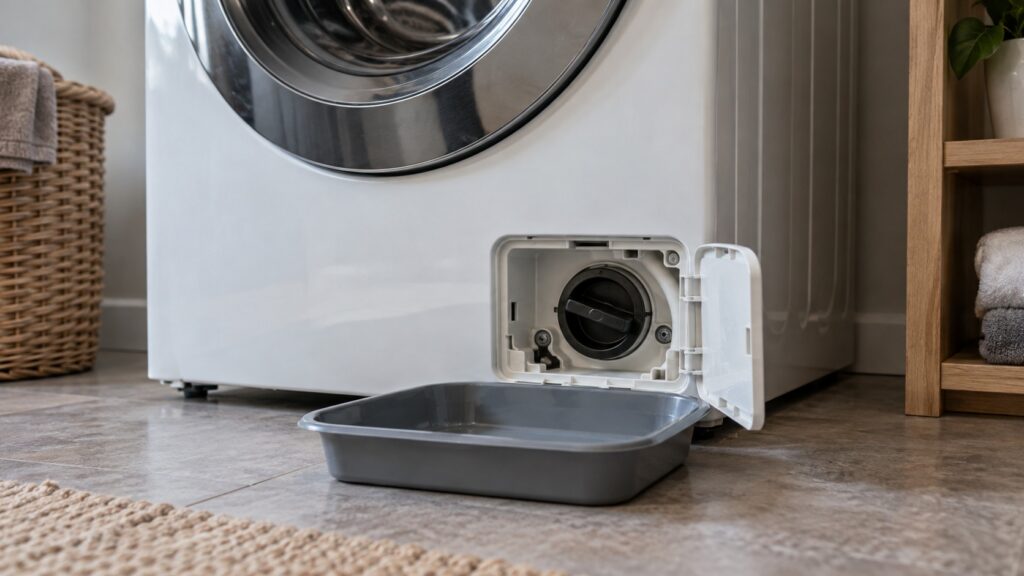
- Find the small access panel at the bottom front of the cabinet and open it.
- Put a shallow pan and a few towels under the filter cap. More water comes out than you expect.
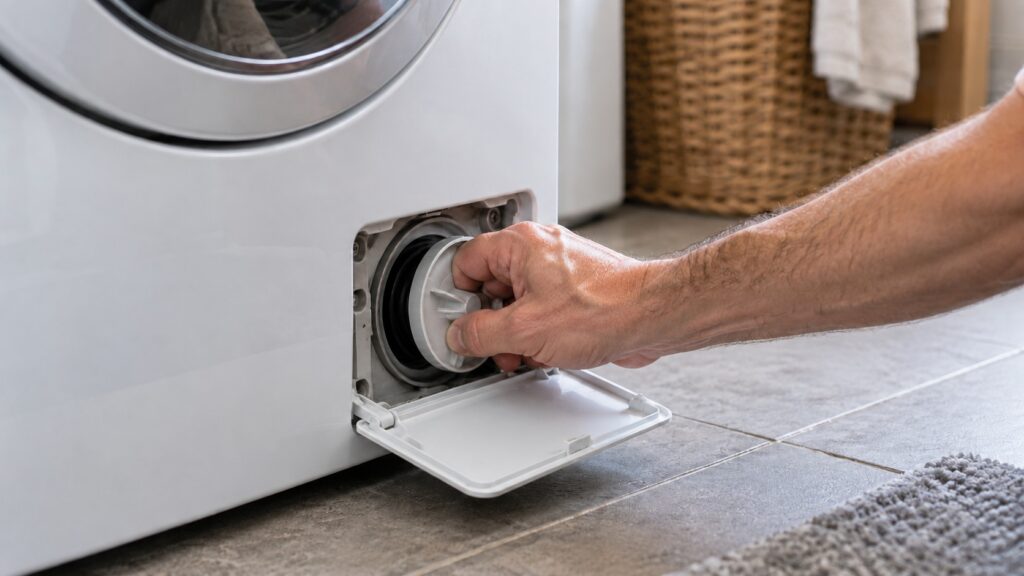
- Turn the filter cap counterclockwise slowly, letting the water drain into the pan. If the pan fills, tighten the cap and empty it, then continue.
- Pull out the filter and clear out coins, lint, hair clips and fabric scraps. Rinse it under running water and scrub gently with an old toothbrush.
- Shine a flashlight into the housing and remove anything visible. Do not push a tool deep into it, and if an object is lodged where you cannot reach it, stop there.
- Screw the filter back in until it is snug, close the panel, restore the water and power, and run a short drain-and-spin cycle to confirm the washer empties normally.
What else should you check along the drain path?
A clean filter that does not cure F21 sends you down the hose. Pull the washer forward carefully and look at the drain hose behind it. It should not be kinked against the wall, and it should not be pushed too far into the standpipe. The F21 page recommends no more than about 4.5 inches of hose inside the standpipe, because pushing it deeper can create backpressure the pump cannot work against. If you need to re-seat the hose, make sure the connection stays loose enough to allow air to escape.
Also look at the outlet itself. A partly blocked standpipe or a slow house drain will mimic a washer fault. If a bucket of water poured into the standpipe drains slowly, the problem is in the plumbing, not the machine. Our guide to how to maintain your KitchenAid washer lists the rest of the routine upkeep, and the washer installation and setup guide shows the correct hose arrangement.
When does a clogged filter turn into a technician visit?
Call us when a freshly cleaned filter and a clear hose do not end F21, when you can hear the pump motor running but nothing moves, or when you find a foreign object you cannot reach. In those cases the impeller may be jammed or the pump itself may be worn out. The affected models listed on our site include the KAWS850G, KAWS700G, KHWS01PMT2, KHWS02RMT1 and the KHWV01RSS, so tell us your model when you call. You can read about the visit on the KitchenAid washer repair page or book a visit directly.