This guide covers Kitchenaid Ice Maker Not Making with practical, technician-backed advice.
When a KitchenAid ice maker stops producing ice, the most common causes are a frozen or blocked water fill tube, a failing water inlet valve that can’t supply water to the mold, a burned-out ice maker control module, or a low or shut-off household water supply line. Because ice makers sit at the intersection of the plumbing and refrigeration systems, troubleshooting means checking both.
Understanding the Kitchenaid Ice Maker Not Making
Below, our specialists break down everything you need to know about the Kitchenaid Ice Maker Not Making.
Frozen Fill Tube
The small plastic or metal tube that delivers water into the ice mold runs through the cold freezer air, and if freezer temperatures run even a few degrees colder than normal, water inside that tube can freeze between cycles, blocking the next fill entirely. This is one of the most common and easiest to confirm causes: locate the fill tube near the back of the ice maker unit and check for a visible ice blockage. A hair dryer on low heat, held a safe distance away, can clear a minor freeze-up without needing any part replacement.
Water Inlet Valve Failure
The water inlet valve is an electrically controlled valve, usually located behind the refrigerator or under the sink area, that opens briefly during each ice-making cycle to let water flow to the mold. Mineral deposits from hard water gradually restrict this valve’s opening, or it can fail electrically and stop opening at all. A valve that’s failing due to mineral buildup often produces smaller ice cubes or a slower ice production rate before failing completely, giving some early warning.
Ice Maker Control Module
The module is essentially a small computer that tracks the ice maker’s cycle: filling, freezing, and harvesting. When this module fails, the ice maker can appear completely dead even though water supply and freezer temperature are both fine. Some modules have a manual test cycle you can trigger to help confirm whether the issue lies with the module or elsewhere in the system, though the exact procedure varies by model.
Water Supply Issues
Before assuming a component failure, confirm the household water line supplying the refrigerator is fully open, since a partially closed valve behind the fridge or under the sink reduces water pressure enough to prevent proper ice mold filling even though the inlet valve itself works fine. This is especially worth checking after any nearby plumbing work.
Freezer Temperature Too Warm
Ice makers typically need freezer temperatures at or below the manufacturer’s recommended setting to harvest ice reliably. If your freezer is running warm for any of the reasons covered in our freezer troubleshooting guide, the ice maker may simply be a secondary symptom of that larger cooling issue rather than a problem of its own.
Quick Checks Before Service
- Inspect the fill tube for visible ice blockage.
- Confirm the water shutoff valve behind the fridge or under the sink is fully open.
- Verify freezer temperature is at the recommended setting.
- Check whether the ice maker’s arm or sensor switch is in the ‘on’ position.
Standalone Ice Makers vs Built-In Units
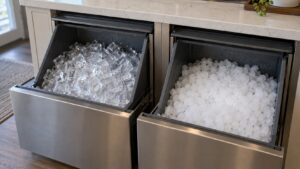
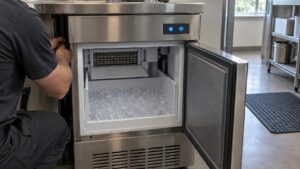
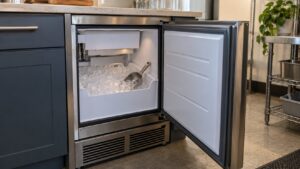
KitchenAid also offers standalone under-counter ice makers separate from refrigerator-integrated units, and these behave somewhat differently during troubleshooting since they have their own dedicated water line, drain, and condenser rather than sharing systems with a refrigerator’s cooling cycle. A standalone unit that’s stopped producing ice should be checked for a clogged condensate drain first, a failure point that doesn’t exist on refrigerator-integrated ice makers, before moving on to the inlet valve and control module checks described above.
Water Filtration and Ice Quality
Cloudy or off-tasting ice is a related but distinct complaint from ice not forming at all, and it usually points to an overdue water filter rather than any of the mechanical failures covered here. Replacing the refrigerator’s water filter on the manufacturer’s recommended schedule, typically every six months, keeps both drinking water and ice quality consistent and prevents mineral buildup from reaching the inlet valve in the first place, extending its service life considerably.
Scheduling Repair
Inlet valve and control module replacements are affordable, targeted repairs for an experienced technician, and our team carries these parts from trusted parts suppliers for most KitchenAid refrigerator and standalone ice maker models. Check compatibility on our models page and schedule a visit. Manufacturer specifications are available at kitchenaid.com.