This guide covers Kitchenaid Range Repair Costs with practical, technician-backed advice.
“How much to fix my range?” is one of those questions where the honest answer is “it depends on which half is broken.” A range is really two appliances built into one shell — a cooktop and an oven — and KitchenAid’s dual-fuel models add a third layer with separate gas burner and electric oven systems. Diagnostic visits for range issues start from a standard call-out fee, with the total shaped heavily by which system is involved.
Understanding the Kitchenaid Range Repair Costs
Below, our specialists break down everything you need to know about the Kitchenaid Range Repair Costs.
Cooktop-Side Repairs
On gas cooktops, the most common calls involve an igniter that clicks but won’t light, a burner that won’t hold a low simmer, or a control knob/valve that’s sticking. These are generally on the lower end of range repair costs since the components are accessible from the cooktop surface without major disassembly. On electric and induction cooktops, a failed element or a cracked induction coil control board sits toward the middle of the range, since induction electronics require more specialized diagnostic time than a simple electric coil swap.
Oven-Side Repairs
Oven repairs on a range follow the same patterns covered in our oven repair cost guide — igniter and bake element issues toward the lower-to-middle end, control board and temperature sensor failures in the middle, and anything involving the self-clean lock mechanism or door hinge assembly running higher due to the disassembly required to access those parts.
Dual-Fuel Models Add Complexity
A dual-fuel range pairs a gas cooktop with an electric convection oven, which means it has two separate ignition/heating systems and, often, two separate control boards or a shared board handling both. Diagnosing a dual-fuel unit sometimes takes longer simply because a technician has to isolate which system — gas or electric — is actually causing the reported symptom, especially when a single problem (like a shared control board) affects both sides at once.
The Control Board Wildcard
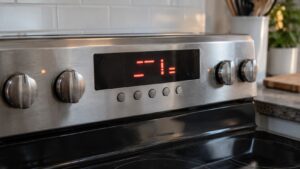
Range control boards handle both display functions and, in many models, safety interlocks for the self-clean cycle and door lock. A board failure can present as almost anything — unresponsive buttons, a display that won’t light, an oven that won’t heat despite the burners working fine — which makes accurate diagnosis the single biggest cost-saving step, since board replacement without confirming the board is actually responsible is how repair costs balloon unnecessarily.
Age, Availability, and Installation Type
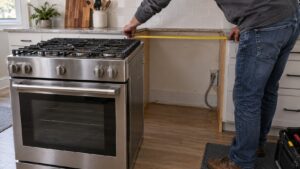
Slide-in and freestanding ranges are generally more accessible than range-style units built into custom cabinetry, which affects labor time. Parts availability also matters — a control board or induction module for a range that’s been discontinued for several years may need to be sourced from a specialty supplier, adding both time and cost compared to a currently-produced model.
What a Technician Actually Checks First
A competent range diagnosis doesn’t start with a parts guess — it starts with isolating which system reports the symptom. For a “won’t heat” oven complaint on a dual-fuel unit, that means confirming gas supply and igniter function are unaffected before assuming the electric oven side is the culprit. This sequence matters because replacing the wrong component not only fails to fix the problem, it adds cost on top of whatever the original repair should have been, which is exactly the outcome a proper diagnostic step is meant to prevent.
Getting a Real Number
Because a range combines so many separate systems, a phone estimate is always a rough starting point rather than a firm quote. Our range appliance page covers common issues by range type, and KitchenAid’s site has model-specific specs if you’re trying to identify your exact configuration before calling. We diagnose first and quote the repair before any work begins, so you know the number before committing to it.