This guide covers Kitchenaid Cooktop Types with practical, technician-backed advice.
KitchenAid cooktops come in three main types — gas, electric, and induction — and each heats food differently enough that the “right” choice really depends on your cooking style, cookware, and kitchen’s electrical or gas setup rather than any single type being universally best.
Understanding the Kitchenaid Cooktop Types
Below, our specialists break down everything you need to know about the Kitchenaid Cooktop Types.
Gas Cooktops
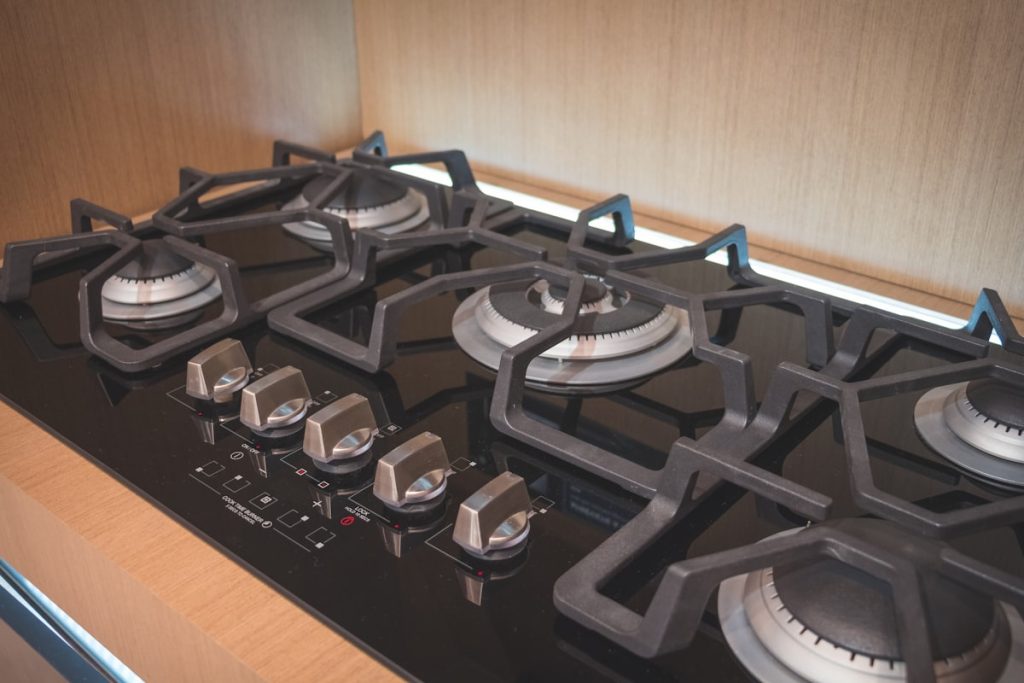
Gas cooktops use an open flame beneath sealed burners, giving you instant visual feedback and immediate heat adjustment. This responsiveness is why many experienced cooks prefer gas for techniques like flambéing, wok cooking, or quickly moving between high and low heat. KitchenAid gas cooktops typically offer a range of burner sizes, including a high-output burner for rapid boiling and a simmer burner for delicate sauces. Maintenance involves keeping burner caps, grates, and igniters clean and free of food debris, since clogged igniter ports are a frequent cause of clicking-but-not-lighting burners.
Electric Coil and Radiant Cooktops
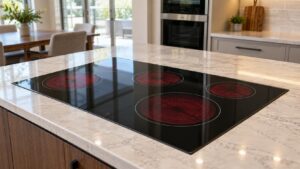
Traditional electric cooktops heat via coils or, in smoothtop radiant models, via elements beneath a ceramic glass surface. These are generally the most affordable option and produce even, if slower-to-adjust, heat. Radiant smoothtops are easy to wipe clean but require flat-bottomed cookware for proper contact and can be scratched by dragging heavy or rough-bottomed pots. Electric cooktops remain a practical, lower-cost option for kitchens without a gas line.
Induction Cooktops
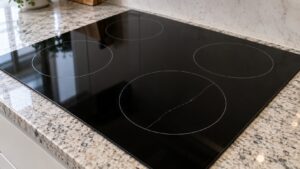
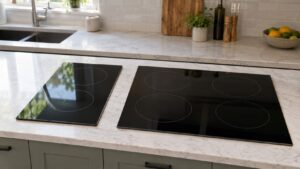
Induction cooktops generate heat directly in the cookware itself through electromagnetic energy, rather than heating the cooktop surface first. This means faster boil times, highly precise temperature control, and a cooktop that stays cool to the touch once the pan is removed, which is a meaningful safety advantage in households with children. The tradeoff is that induction only works with magnetic cookware — cast iron and most stainless steel qualify, while aluminum, copper, and glass cookware generally do not unless they have a magnetic base layer. Check your existing cookware with a refrigerator magnet before switching to induction: if the magnet sticks firmly, it will work.
Comparing Cleanup and Safety
Gas cooktops require the most manual cleaning since grates, burner caps, and igniters all collect spills and residue. Electric smoothtops wipe down easily but can show scorch marks from sugary spills if not cleaned promptly. Induction cooktops are the easiest to clean since spills don’t burn onto a hot surface the way they can on radiant or gas models, and the cool-touch surface reduces burn risk for households with young children or pets.
Repair and Reliability Differences
Gas cooktop repairs typically involve igniters, burner valves, or gas orifice clogs — mechanically straightforward issues that are usually quick to diagnose. Electric radiant cooktops most often need element or infinite switch replacement. Induction cooktops rely on more complex electronic power modules and induction coils, so when something does go wrong, diagnostics tend to be more involved, though induction units generally have fewer moving parts to wear out over time.
Cookware Compatibility Across Types
Gas and electric radiant cooktops work with virtually any cookware material, including aluminum, copper, glass, and ceramic, as long as the base makes reasonably good contact with the burner or element. Induction is the outlier, requiring a magnetic base, which is worth confirming before you commit to replacing an entire cookware set alongside a new cooktop. Many cookware manufacturers now label induction-compatible pieces clearly, making it easier to shop for replacements if needed.
Choosing the Right Type for You
If you want maximum heat control and don’t mind manual cleaning, gas remains a strong choice. If budget and simplicity are the priority, electric radiant is dependable and affordable. If you want speed, precision, easy cleanup, and better safety, induction is worth checking your cookware compatibility for. Related decisions about full range fuel types are covered in our range fuel type guide, and our cooktop repair service page details common issues across all three types. Current cooktop models and specifications are available at KitchenAid.com. Matching the cooktop type to how you actually cook day to day, rather than to what looks most impressive on a showroom floor, is what determines whether you’re happy with the choice years later.