
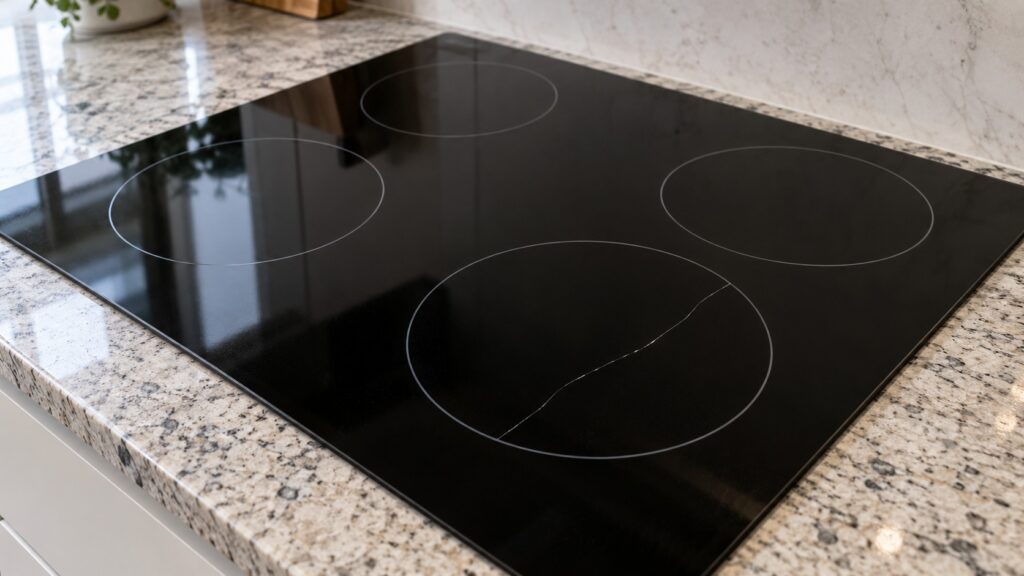
A KitchenAid cracked cooktop glass cannot be repaired. Glue, tape and sealant do not restore a glass-ceramic surface, and a crack lets spills run down onto live electrical parts. So the real choice is between replacing the glass or the cooktop assembly with a new part and replacing the whole cooktop. Stop using the cooktop at once, switch off its breaker, and decide based on three things: whether the damaged part is sold on its own for your model, how old the cooktop is, and how healthy everything under the glass still is.
Is it safe to use a cooktop with a cracked glass top?
No, and the reason is practical and not just cautious. Under a radiant glass top there are electric heating elements and wiring. Under an induction top there are coils and electronics. A crack, even a thin one, can let water, grease or boiling liquid seep through to those parts. The result can be a short circuit, a tripped breaker, a burn from a live element or, in the worst case, a fire.
A crack can also spread. Heat expands glass, so a crack that starts as a hairline can run across the surface the next time an element heats up. Switch the cooktop off at the controls, switch off the breaker so nobody uses it by mistake, and let it cool before you handle any broken pieces. Do not cook on the unbroken zones.
How does the glass crack in the first place?
Knowing the cause matters, both for avoiding a repeat and for judging a warranty question. The usual causes are:
- Impact. A heavy pot, a cast iron lid or a dropped jar can chip or crack the surface. This is the most common cause and is generally not a manufacturing fault.
- Thermal shock. Cold liquid on a very hot zone, or a cold pan set on a hot element, stresses the glass.
- Sugar spills. Sugar melts and, when it cools, bonds to the surface and can pit or crack it if pulled off while hot.
- Rough or oversized cookware. Sliding a pan with a rough base scratches the surface, and a pan much larger than the zone creates uneven heat.
- Pressure at the edges. Leaning on the cooktop or an uneven cutout supporting it can load the glass unevenly.
Occasionally glass breaks with no impact at all. That is the case people mean when they ask whether the manufacturer will replace a defective ceramic cooktop. Warranty terms differ by model and age, and impact damage is generally not covered, so check the terms and read our warranty check before repair or replace guide first.
What does replacing the glass involve?
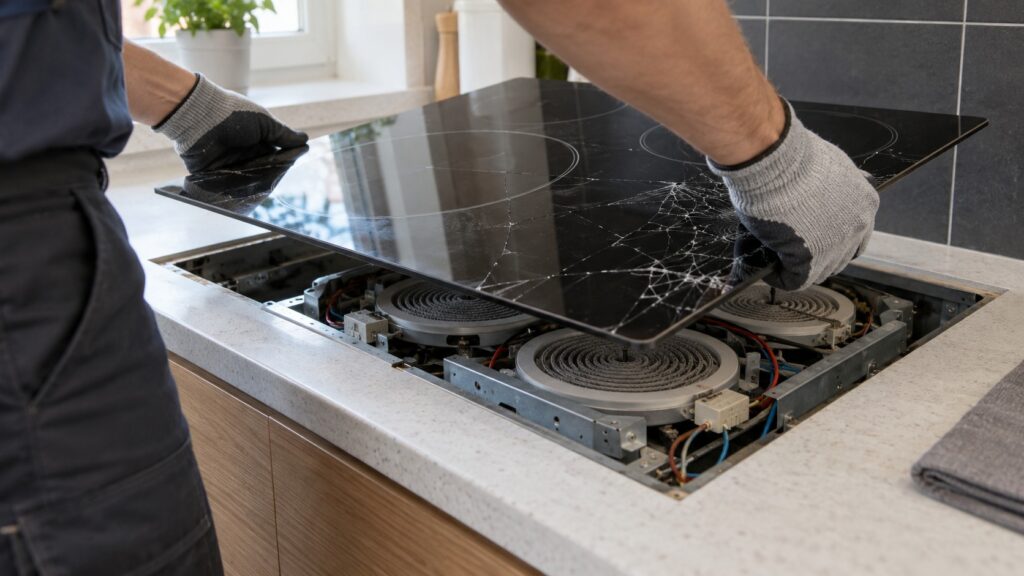
How the cooktop is built decides what a replacement means. On some models, the glass top is a separate part that can be swapped without replacing the heating elements or the electronics. On others, the glass, the elements and the frame are one assembly, and replacing one means replacing all of them. A technician can tell which applies to your model number in a few minutes.
Induction and radiant models differ too. On an induction cooktop, the glass sits over the coils and sensors, and the surface and the electronics are a large share of the value of the whole unit. On a radiant cooktop, the elements are cheaper and simpler. Our guide on how KitchenAid induction cooktops work shows what lies under the glass.
Whichever part is replaced, the fit matters. A replacement top or assembly must match the cutout in your countertop exactly, because a cooktop that is a fraction of an inch off leaves a gap that traps spills.
When does repairing the cooktop make sense?
Replacing the glass or the assembly is worth considering when:
- The cooktop is relatively new and the elements, controls and sensors all work.
- The part is available for your exact model and fits the existing cutout.
- The rest of the kitchen is built around this cooktop, with matching finishes and cabinets cut to size.
- You have had no other cooktop faults, such as error codes, tripped breakers or sticking controls.
In that case a replacement part keeps the whole kitchen intact and avoids carpentry. Our general KitchenAid cooktop repair or replace guide covers the broader decision, and the glass question is one part of it.
When is replacing the whole cooktop the better choice?
Replace the cooktop when the unit is old and other parts are showing wear, when the part for your model cannot be sourced, when the elements or the controls have already failed, or when a new cooktop is the only way to get a surface that fits an updated layout. Before you buy, read the installation requirements, because a different model may need a different cutout or a different electrical connection. If your model is no longer sold, our guide on replacing a discontinued KitchenAid appliance shows how to match size and hookups.
Check your homeowner’s insurance, too. Accidental damage is sometimes covered, and a quick call can change the economics of the choice.
How do you avoid cracking the next one?
Set pans down rather than dropping them, wipe sugar spills only when cool or with a dedicated scraper, and use cookware with a flat, smooth base that matches the zone. Our radiant cooktop care tips and the cooktop maintenance guide cover the daily habits.
When should you call a technician?
Call as soon as you see a crack, a chip near an element or any pitting that goes through the surface. A technician can confirm the model, tell you whether the glass is sold separately and give an honest recommendation on repair against replacement. Our KitchenAid cooktop repair team will check the elements and wiring under the glass at the same visit. We are an independent repair company, not a factory service arm, and we will tell you when a repair is not worth doing. You can book a visit and include the model number from the cooktop’s underside or paperwork.