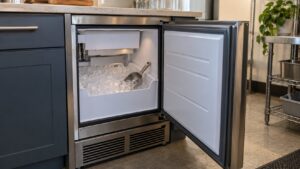
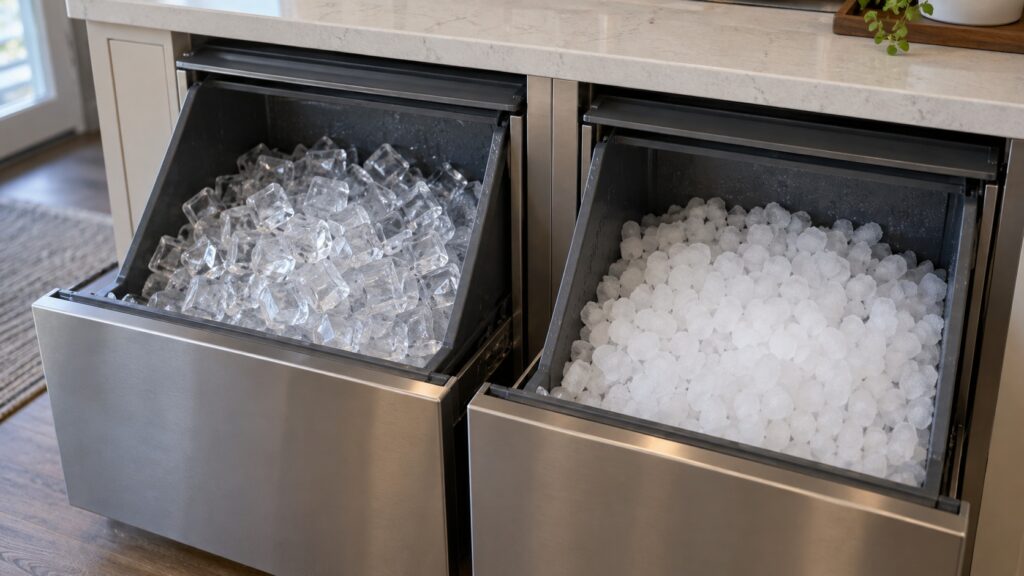
TL;DR: KitchenAid sells two distinct kinds of built-in ice makers, and they solve different problems. A clear ice maker such as the KUIO338HSS produces slow-melting, restaurant-style clear cubes for drinks. An undercounter gourmet ice maker such as the KUIX535HPS produces a much larger volume of smaller, chewable nugget-style ice quickly. Choosing between them is a question of volume and ice texture, not of which unit is newer or better built.
What is the difference between a clear ice maker and a nugget ice maker?
The two machines make ice by fundamentally different processes, which is why the resulting ice looks and behaves so differently. A clear ice maker like the KUIO338HSS forms ice slowly on a cooled plate or grid, letting dissolved air and minerals escape from the water as it freezes layer by layer. That slow process is exactly what produces the dense, transparent cube that melts slowly in a glass. A gourmet nugget maker like the KUIX535HPS instead scrapes ice continuously off a freezing cylinder and compacts it into soft, porous pellets. That process trades clarity and density for speed and volume — nugget ice forms much faster and in much greater quantity, but it is soft, cloudy and melts quickly by design, not by defect.
Neither machine is a lesser version of the other; they are built around opposite priorities. Buying based on the assumption that clear ice is simply “better” ice, or that nugget ice is simply faster ice with no trade-off, leads to the wrong purchase for how a kitchen actually uses ice.
How much ice does each type actually produce per day?
Daily output is where the two designs diverge the most. A clear ice cycle takes longer per batch because the slow, layered freezing that produces clarity cannot be sped up without losing that clarity — so a clear ice unit produces a comparatively modest number of cubes across a full day. A nugget ice maker’s continuous-scrape cycle runs much faster per batch, and that speed compounds across a day into a meaningfully larger total volume. For a household that goes through large amounts of ice daily — filling water bottles, blending drinks, keeping coolers stocked — that daily volume difference is usually the deciding factor before ice appearance ever becomes relevant.
Which one fits a household that entertains versus one with high daily ice use?
If the priority is how a drink looks and how slowly a cube melts in a glass — a home bar, a wine and cocktail setup, a space built around entertaining guests — a clear ice maker like the KUIO338HSS is the unit built for that outcome. The slower output rate matters less in that use case, because entertaining draws on ice in bursts rather than continuously through the day.
If the priority is simply having a large, reliable supply of ice available at all times — a large family, a household that fills water bottles and coolers constantly, or anyone who specifically prefers the chewable texture of nugget ice — a gourmet nugget unit like the KUIX535HPS or KUIX535HPA matches that use case better. The faster cycle and higher volume outweigh the clarity trade-off when the ice is being used constantly rather than showcased in a glass.
What installation requirements are the same for both types?
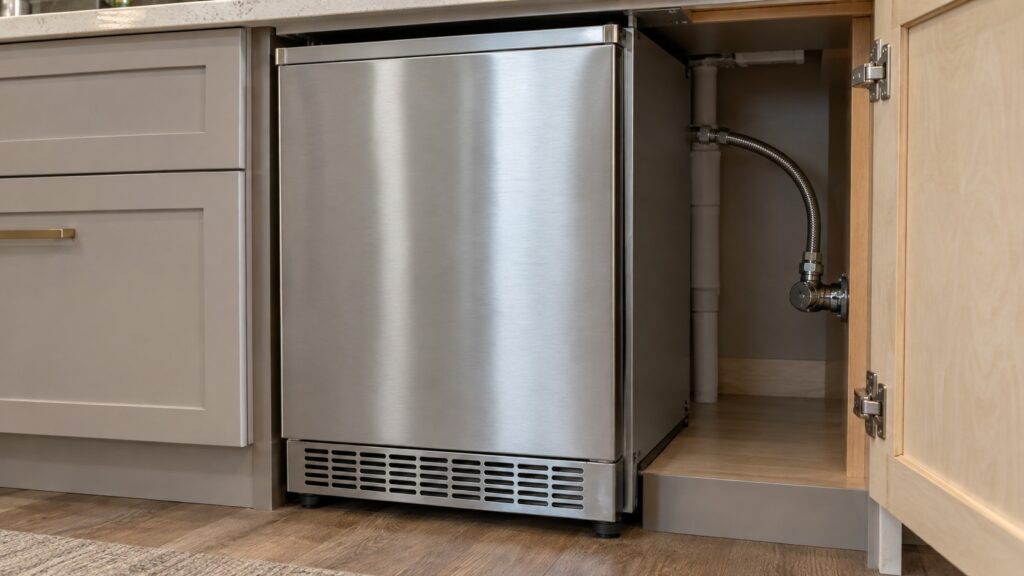
Both a clear ice maker and a nugget ice maker are built-in undercounter units, and both need the same basic infrastructure: a dedicated cold water line with its own shutoff, proper drainage either by gravity to a nearby drain or through a small condensate pump, and clearance around the cabinet opening for airflow to the unit’s condenser. Neither type should be installed in a fully enclosed cabinet without a ventilation panel, since both rely on expelling heat from the same side or front vents that a sealed cabinet would trap. Ignoring ventilation clearance shortens the life of either type equally — it is not a clear-ice-specific or nugget-ice-specific requirement.
Does one type need more maintenance than the other?
Both require the same basic care: a water filter change on the schedule specified for the model, and periodic cleaning of the ice bin and water reservoir to prevent scale and mineral buildup, which affects ice quality on either type. Clear ice makers are somewhat more visibly affected by mineral buildup, since any cloudiness in the water shows up directly in the clarity of the cube — the entire selling point of that unit. A nugget maker’s ice is already opaque, so mild mineral buildup is less immediately obvious, though it still affects cycle time and machine longevity the same way. Neither design is meaningfully more maintenance-intensive than the other when filters and cleaning schedules are followed.
What should decide the purchase if you are choosing between the two?
Deciding on a KitchenAid clear ice vs nugget ice maker purchase should start from how the ice will actually be used, not from spec sheets. If most of the ice goes into glasses of a drink where appearance and slow melt matter, a clear ice maker is the right purchase. If most of the ice is consumed quickly and in volume — bottles, coolers, chewing the ice itself — a nugget maker will serve the household better and will do it with less strain on the unit, since it is running within the workload it was designed for rather than being pushed past a slower design’s comfortable output.
For general upkeep once either unit is installed, see our KitchenAid ice maker tips, and if an existing unit has stopped producing ice at the rate it used to, our guide to ice maker not making ice covers the most common causes. Our technicians service both clear ice and nugget ice undercounter units through KitchenAid ice maker repair, and can help you weigh which type fits your kitchen before you buy. Schedule a visit if you would like an assessment of your space and water line before installation.