This overview covers Kitchenaid Ovens — the lineup, signature technologies, common problems, and upkeep.
Unlike a freestanding range, a KitchenAid wall oven is built into cabinetry and sold as a dedicated baking appliance, which changes both how it’s used day to day and how it eventually shows wear. Understanding the configuration you own, single, double, combination, or steam-assisted, makes it easier to recognize a real problem versus normal quirks of the design.
Understanding the Kitchenaid Ovens
Below, our specialists break down everything you need to know about the Kitchenaid Ovens.
Wall oven configurations
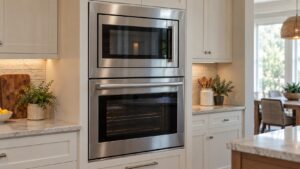
Single wall ovens give one cavity and one control panel, typically installed at counter height for easier access. Double wall ovens stack two independently controlled cavities, letting a household run two different temperatures and cook times simultaneously, though the two cavities often share a control board and sometimes a single electrical circuit. Combination units pair a standard oven cavity with a microwave in the same footprint, and steam-assisted ovens add a water reservoir and steam generator to inject humidity during baking for better crust and rise on bread.
What sets Even-Heat convection apart
Many KitchenAid wall ovens use Even-Heat true convection, meaning the convection fan pulls air across a heating element built specifically for that purpose rather than reusing the bake element. The result is more consistent temperatures across every rack position, which matters more in a wall oven than a range since households tend to use multiple racks at once for batch baking or holiday cooking.
Signs of aging
Uneven baking, one side of a sheet pan browning faster than the other, is often the first hint that a bake element or convection fan motor is wearing out, even before the element visibly stops glowing. Self-clean cycles can expose door latch weaknesses that don’t show up in normal use, since the latch has to hold under much higher heat than everyday baking requires. Double ovens sometimes develop a problem in one cavity that intermittently disables the other, a symptom that traces back to the shared control board rather than either cavity’s own hardware. Steam-assisted models can develop mineral buildup in the water line over time if tap water is used instead of filtered water, which eventually affects the steam generator’s output.
Living with a wall oven
Because a wall oven is fixed in place, most households run it harder and longer than a portable appliance, especially during holiday seasons with back-to-back baking. Cleaning the door gasket regularly helps it seal properly, which keeps heat loss down and reduces strain on the bake element trying to compensate for a leaky seal. Running the self-clean cycle occasionally rather than constantly extends the life of the door latch mechanism, since each cycle exposes it to sustained high heat.
Getting help
An oven that won’t reach temperature, won’t lock for self-clean, or displays an error code is a job for a hands-on diagnosis rather than trial and error. Our oven repair service covers the full diagnostic and repair process, and our models directory lists specifications for single, double, and combination units if you’re comparing what you own against current offerings. KitchenAid’s own site at kitchenaid.com also publishes use-and-care manuals by model number.
Repair versus replacement
A wall oven’s built-in nature changes the replacement calculus compared to a freestanding range, since swapping a wall oven usually means matching cabinetry cutout dimensions rather than simply rolling in a new appliance. That makes repair the more attractive option in most cases, even for a moderately expensive part like a convection fan motor or a control board, since replacement carries installation costs a freestanding range wouldn’t. A double oven with a genuinely failed cavity, rather than a shared-board symptom, is the clearest case where full replacement might be worth comparing against a two-part repair estimate.
Choosing between single and double configurations
Households that regularly cook multiple dishes at different temperatures find a double oven pays for itself in convenience, while households that mainly use one oven at a time may find the extra cost and cabinet space required for a second cavity hard to justify. Steam-assisted models suit households that bake bread or pastries regularly enough to benefit from the crust and rise improvements humidity injection provides, but add a water reservoir that needs periodic attention most standard ovens don’t require.