This guide covers Maintain Kitchenaid Range Hood with practical, technician-backed advice.
A range hood only has one job — move air out of the kitchen — but grease buildup makes that job progressively harder over time until the blower motor is straining against a filter it can barely pull air through. Keeping a KitchenAid range hood maintained is less about complexity and more about consistency.
Understanding the Maintain Your Kitchenaid Range Hood
Below, our specialists break down everything you need to know about the Maintain Your Kitchenaid Range Hood.
Understanding the Maintain Kitchenaid Range Hood
Below, our specialists break down everything you need to know about the Maintain Kitchenaid Range Hood.
Clean or Replace Grease Filters Monthly
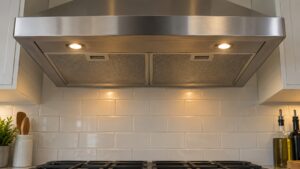
The baffle or mesh filters sitting under the hood are the first line of defense against grease reaching the blower housing, and they saturate faster than most people expect in a kitchen that cooks regularly. Aluminum mesh filters can go in the dishwasher or soak in hot water with degreaser; stainless baffle filters handle the same treatment. Waiting until they’re visibly clogged means the blower has already been working overtime for weeks.
Check the Charcoal Filter on Ductless Models
If the hood recirculates air rather than venting outside, it relies on a charcoal filter to absorb odor rather than a duct to carry smoke away. Unlike grease filters, charcoal filters aren’t washable — they need full replacement roughly every six months in normal use, sooner in a kitchen that fries often. A hood that’s stopped controlling odor even though the fan sounds fine is almost always due for a new charcoal filter.
Inspect the Ductwork for Grease Accumulation
On vented models, grease doesn’t stop at the filter — some of it makes it into the ductwork itself, where it accumulates on interior walls and duct dampers. A damper that’s gummed shut with grease restricts airflow even when the blower and filters are clean, and it’s a step people skip because it’s out of sight. Having the ducting inspected every year or two, especially in a heavy-use kitchen, catches this before it becomes a fire hazard.
Listen to the Blower Motor
A healthy blower motor runs with a consistent, even hum at each fan speed. Rattling, grinding, or a motor that only works on high speed usually points to worn bearings or a failing speed control board — problems that get worse, not better, with continued use. Catching this early is usually the difference between a motor bearing service and a full blower assembly replacement.
Wipe Down the Housing and Light Fixtures
Grease film on the hood’s exterior and light lens isn’t just cosmetic — a greasy lens dims task lighting over the cooktop, and buildup around the control panel can make touch controls unresponsive. A degreasing wipe-down every couple of weeks keeps both functioning as intended.
Match the Cleaning Schedule to How Often You Cook
A household that cooks daily with a lot of frying or high-heat searing will saturate filters and duct interiors far faster than one that cooks a few times a week. Rather than following a generic calendar, watch for the practical signs — a filter that feels sticky within two weeks instead of four, or a noticeably weaker pull of smoke and steam from the cooktop than when the hood was new. Adjusting the cleaning interval to actual usage catches problems before they show up as reduced performance.
Recognizing When It’s a Repair, Not a Cleaning
If the blower is noisy after a full filter and duct cleaning, or the hood won’t power on at all, the issue has moved into repair territory. Our range hood repair cost guide covers what typically factors into that estimate, and our range hood appliance page has model-specific ventilation notes. KitchenAid’s official site also publishes filter part numbers by model if you’re sourcing replacements yourself. Staying ahead of grease buildup is the single biggest factor in how long a range hood’s blower motor lasts.
Getting your KitchenAid range hood fixed for good
The advice above applies to most KitchenAid range hood setups. If the problem behind “How to Maintain Your KitchenAid Range Hood” persists after you have tried the safe checks here, an experienced KitchenAid technician can pinpoint the exact cause and complete the repair with genuine parts. Our specialists focus on KitchenAid range hoods specifically, so diagnosis is faster and repeat visits are rarer.
Pricing starts from a base and depends on the diagnosis — we never quote a fixed price unseen, and completed work is covered by a labor guarantee. When you are ready, book a repair online, look up any problem in our range hood error-code library, or find your unit in the model directory.