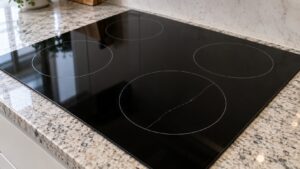
KitchenAid induction cooktops work by passing an electrical current through a copper coil beneath the glass surface, generating an electromagnetic field that induces heat directly in ferrous (magnetic) cookware placed on top — the cooktop surface itself stays relatively cool, and only the pan gets hot, which is fundamentally different from how gas or traditional electric coil cooktops transfer heat.
Understanding the Kitchenaid Induction Cooktops Work
Below, our specialists break down everything you need to know about the Kitchenaid Induction Cooktops Work.
The Electromagnetic Principle
Underneath each induction burner sits a coil of copper wire. When activated, the coil generates a rapidly alternating magnetic field. When magnetic cookware is placed within that field, the field induces an electrical current directly in the metal of the pan, and that current generates heat through resistance in the metal itself. Because the heat is generated in the cookware rather than transferred from a heated surface, induction cooking responds to temperature changes almost instantly compared to gas or radiant electric.
Why Cookware Matters
Induction only works with magnetic (ferrous) cookware — cast iron and most stainless steel work well, while aluminum, copper, and glass cookware won’t heat at all unless they have a magnetic base layer bonded to them. A simple test is to hold a magnet to the bottom of a pan: if it sticks firmly, the cookware is induction-compatible. This is the most common source of “my induction cooktop isn’t heating” confusion — it’s often a cookware issue rather than an appliance problem.
Speed and Precision Advantages
Because heat is generated directly in the cookware with no intermediate surface to warm up, induction cooktops both heat up and respond to adjustments faster than gas or traditional electric. Boiling water is typically noticeably quicker, and simmering at a precise low temperature is easier to hold steady since there’s no residual heat lag from a hot coil or grate.
Safety and Efficiency Benefits
Since the cooktop surface itself isn’t the heat source, it stays much cooler to the touch than gas or electric coil surfaces, which reduces burn risk and makes spills easier to clean since they don’t bake onto a hot surface. Induction is also more energy-efficient than gas or standard electric because virtually all the generated energy transfers into the cookware rather than being lost to ambient air.
Deciding Between Induction and Gas
If you’re weighing an induction cooktop against a gas range for a kitchen remodel, the decision often comes down to cookware compatibility, cooking style, and whether you value gas’s visual flame feedback over induction’s speed and easier cleanup. For a broader comparison covering ranges specifically, see our dual-fuel vs. gas ranges guide, and for physical installation requirements, see our cooktop installation guide.
Common Induction Cooktop Issues
Because induction relies on precise electronics and coil components, issues tend to be electrical rather than mechanical — a burner that won’t recognize cookware, error codes related to overheating protection, or a control panel that stops responding. These are generally diagnosable by an experienced technician rather than requiring cooktop replacement. For current KitchenAid induction cooktop models, visit KitchenAid’s official site.
Cleaning and Everyday Care
Because the induction surface itself stays cool, spills are far less likely to bake onto the glass, which makes daily cleanup faster than with a gas grate or electric coil surface. Even so, the glass surface can scratch from abrasive cleaners or dragging heavy cast iron across it, so a dedicated ceramic cooktop cleaner and gentle wiping motion will keep the surface looking new for years.
Power-Sharing Zones on Induction Cooktops
Some induction cooktops manage a limited total power budget across zones, meaning running two burners at maximum output simultaneously can cause one to automatically throttle back slightly. This is a normal design feature rather than a malfunction, and understanding it helps explain why a burner might seem to lose power the moment a second high-setting burner is activated.