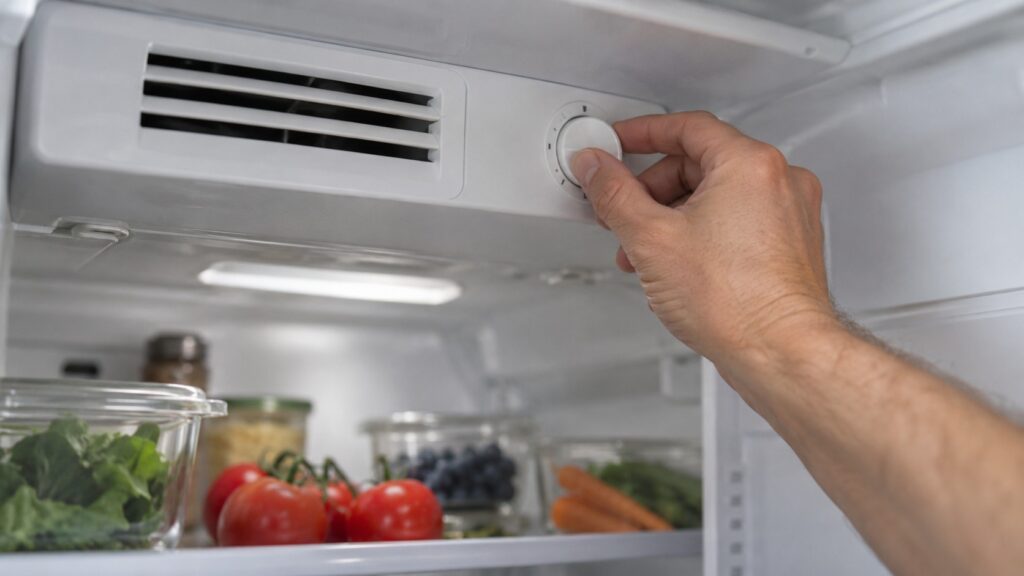
The best KitchenAid refrigerator temperature settings are about 37°F for the fresh food compartment and 0°F for the freezer. Food safety guidance puts the upper limit for the refrigerator at 40°F, so aiming a few degrees below it gives you a safety margin. Set the controls once, wait a full day, then check with a thermometer instead of changing the dial again and again. Most complaints that a refrigerator is “too warm” or “freezing the lettuce” come from adjusting too quickly or from reading the wrong spot.
What temperature should a KitchenAid refrigerator be set to?
Aim for 37°F in the fresh food compartment and 0°F in the freezer. Those numbers keep milk, meat and leftovers safe, keep produce from freezing and keep frozen food firm without freezer burn. If your controls show a number scale instead of temperatures, set the dial to its midpoint and verify with a thermometer, because the numbers on a dial describe relative cold and not a precise temperature.
The reason to aim below 40°F rather than at it is that your refrigerator’s temperature is not constant. It rises when you load groceries, when the door is open and during the automatic defrost cycle, so the average has to sit comfortably under the limit for the peaks to stay under it too.
How do you set and check the temperature properly?
People often set the temperature, glance at the display and move on. That is the quickest way to end up with food that is either too warm or half frozen. A better routine takes a day:
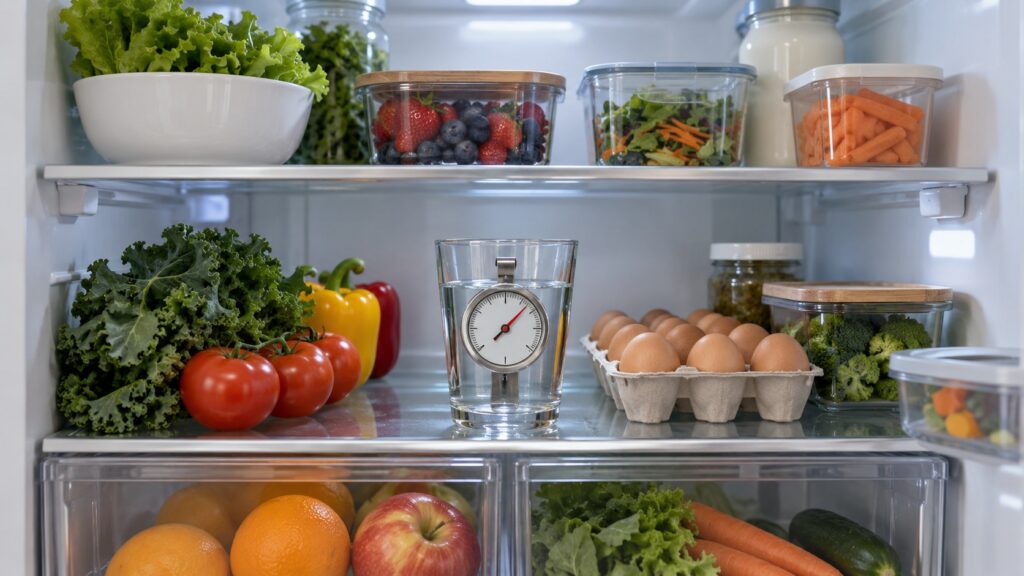
- Put a thermometer in the right place. Place an appliance thermometer in a glass of water on the middle shelf. Water responds slowly like food does, while a thermometer in the air swings with every door opening.
- Set the control to the target. Use 37°F for the refrigerator and 0°F for the freezer, or the midpoint on a scale.
- Wait 24 hours with the doors closed as much as possible. Changes to the setting need time to work through the whole compartment.
- Read the thermometer. If it shows 39°F or more, lower the setting one step. If it shows below 34°F, raise it one step.
- Wait another day before you adjust again. Moving the dial twice a day only chases the temperature in circles.
A new refrigerator needs the same patience at the start. After installation, give it a full day to reach temperature before you load it with food.
Why are some shelves colder than others?
Cold air enters the compartment through vents and spreads from there, so the temperature is not even. The back of the lower shelves, close to the vents, is the coldest place. The door shelves are the warmest because they warm up every time the door opens. Use that to your advantage:
- Keep milk, eggs, raw meat and leftovers on the interior shelves, not in the door.
- Store condiments, juice and other items that tolerate warmth in the door.
- Keep leafy greens away from the vents if they freeze, and use the crisper drawer controls for humidity rather than for temperature.
- Do not block the vents with tall containers or packed boxes, since that disrupts the airflow for the whole compartment.
Our guide to how KitchenAid FreshFlow refrigeration keeps food fresh explains how air and humidity are managed inside the cabinet.
What changes with the season and with how full it is?
A refrigerator that is almost empty swings in temperature faster, and a very full one can block the airflow. Aim for a refrigerator that is about three-quarters full, with a little space around items so air can circulate. In a hot kitchen or a hot summer, the refrigerator works harder and may read a degree or two warmer, so check the thermometer more often in the warm months and adjust one step if needed. A freezer that is full holds its temperature better than an empty one, so filling spare space with bags of ice helps.
Avoid putting hot food straight in. Let leftovers cool for a short while at room temperature, then refrigerate them promptly, so that a big warm load does not push the whole compartment above 40°F.
What does it mean when the settings do not seem to work?
If the thermometer shows the refrigerator above 40°F after a day at the correct setting, or the freezer is warmer than 10°F, the setting is probably not the problem. Check the basics first:
- The door gaskets seal all the way around, and the doors close fully.
- The vents inside are not blocked by food.
- The condenser coils are not covered in dust, which makes the refrigerator work harder. See how to maintain your KitchenAid refrigerator.
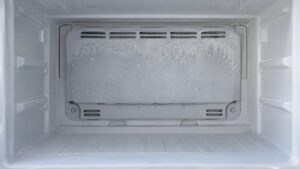
- There is no frost building up at the back of the freezer.
If those are fine and the temperature is still off, a temperature sensor or a cooling component may have failed. A sensor fault sometimes shows up as a code on the display, and our KitchenAid refrigerator E1 page explains what the control reports when the freezer sensor is out of range. For a refrigerator that is warm everywhere, read why a KitchenAid refrigerator is not cooling.
When should you call a technician?
Call when the refrigerator stays above 40°F after a day at the correct setting and the basic checks, when the freezer will not get below 10°F, when food freezes in the refrigerator even at a warmer setting, or when a temperature code appears. Our KitchenAid refrigerator repair technicians measure the actual temperatures, test the sensors and the cooling system and replace only the part that has failed. We are an independent repair company, not a factory service arm, and we will tell you when a repair is not worth doing. You can book a visit and bring the readings from your thermometer.