
This guide covers Extending Lifespan Kitchenaid Appliances with practical, technician-backed advice.
Getting the most years out of your KitchenAid appliances comes down to a short list of consistent habits: keeping components clean, avoiding overloading, addressing small issues before they become big ones, and following basic manufacturer guidance on installation and use. None of this is complicated, but skipping it is the single biggest reason appliances fail years earlier than they should.
Understanding the Extending The Lifespan Of Your
Below, our specialists break down everything you need to know about the Extending The Lifespan Of Your.
Understanding the Extending Lifespan Kitchenaid Appliances
Below, our specialists break down everything you need to know about the Extending Lifespan Kitchenaid Appliances.
Refrigerators: Airflow Is Everything
A refrigerator’s compressor life depends heavily on how easily it can dissipate heat. Clean condenser coils every six months, especially in homes with pets that shed nearby. Keep at least a few inches of clearance around freestanding units, and never block the front grille on built-in models. Also avoid overpacking the interior, since blocked airflow inside the cabinet forces the compressor to run longer to maintain temperature.
Ranges and Ovens: Seals and Sensors
A worn door seal is one of the most common reasons ovens run hotter, longer, or less evenly than they should, since heat escapes and the thermostat compensates by running the heating element more. Inspect the gasket periodically for cracks or gaps, and clean spilled food from oven floors promptly, since baked-on residue can affect the accuracy of oven temperature sensors over time. On gas ranges, keep burner ports clear so flames ignite reliably rather than repeatedly cycling the igniter, which shortens its lifespan.
Dishwashers: Filters and Spray Arms
Clean the filter monthly (see our step-by-step guide below) and periodically check that spray arms rotate freely and aren’t clogged with mineral deposits or food debris. Running an occasional dishwasher-safe cleaning cycle helps prevent limescale buildup, particularly in homes with hard water, which can otherwise clog spray arm nozzles and reduce wash pressure over time.
Washers and Dryers: Load Habits Matter
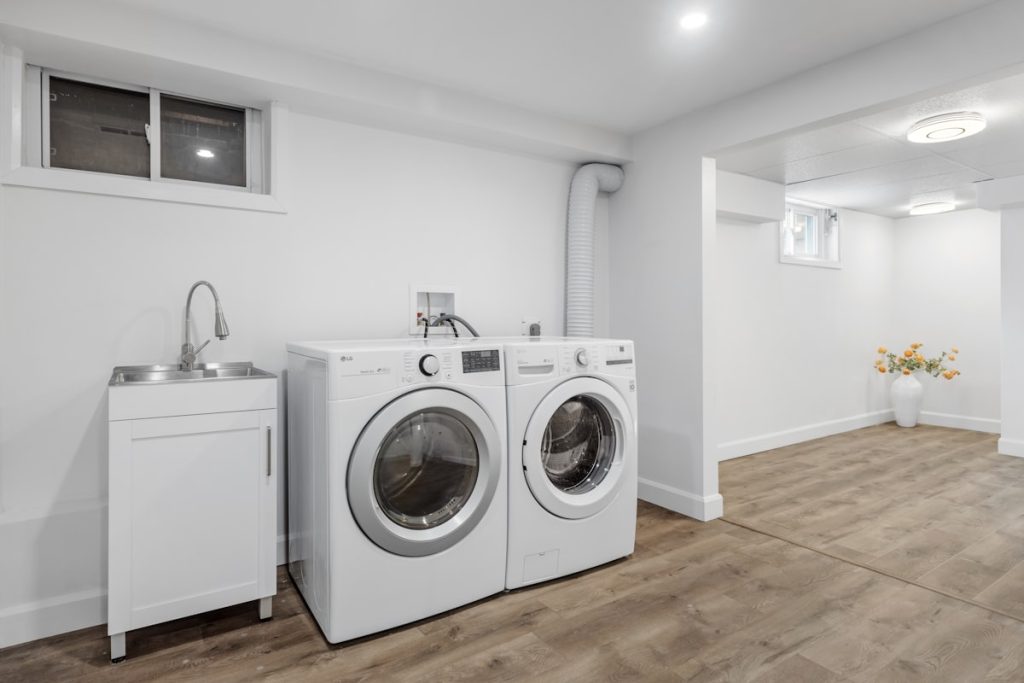
Overloading a washer strains the motor, bearings, and suspension system, while underloading a dryer can actually reduce drying efficiency since clothes need room to tumble properly. Clean the lint filter after every dryer cycle without exception, and have dryer venting inspected periodically, since restricted venting is one of the leading causes of both inefficient drying and dryer fires.
General Habits That Add Years
Avoid slamming doors on any appliance, since hinges and door switches wear out faster under repeated hard use. Address unusual noises, smells, or performance changes promptly rather than waiting, since small mechanical issues — a slightly worn belt, a partially clogged filter — tend to cause secondary damage to other components if left unaddressed. Keep appliances level; an unlevel washer vibrates excessively and wears its suspension prematurely, while an unlevel refrigerator can affect door seals and internal drainage.
Water Quality and Its Effect on Lifespan
Hard water accelerates mineral buildup in dishwashers, ice makers, and washing machine components, which can shorten the effective lifespan of water inlet valves, spray arms, and heating elements. If you live in a hard water area, running periodic descaling treatments and keeping an eye out for visible scale on fixtures gives you an early warning before mineral buildup causes a component failure.
Scheduling Preventive Maintenance
Even with good daily habits, having appliances professionally checked periodically catches issues that aren’t visible during normal use, such as early motor bearing wear or a slowly failing compressor start relay. A once-a-year checkup for major appliances is a reasonable baseline for most households, more often for high-use kitchens.
For specific energy and efficiency habits, see our energy-saving tips guide, and if you’re unsure whether an issue warrants a service call, our DIY vs technician guide can help you decide. Our maintenance service page outlines what a routine checkup covers. Manufacturer care guidance is also available at KitchenAid.com.
Getting your KitchenAid KitchenAid appliance fixed for good
Working through the points above resolves many cases on a KitchenAid appliance. If the problem behind “Extending the Lifespan of Your KitchenAid Appliances” persists after you have tried the safe checks here, an experienced KitchenAid technician can pinpoint the exact cause and complete the repair with genuine parts. Our specialists focus on KitchenAid KitchenAid appliances specifically, so diagnosis is faster and repeat visits are rarer.
Pricing starts from a base and depends on the diagnosis — we never quote a fixed price unseen, and completed work is covered by a labor guarantee. When you are ready, book a repair online, look up any problem in our KitchenAid appliance error-code library, or find your unit in the model directory.