
This guide covers Kitchenaid Dryer Not Drying Or with practical, technician-backed advice.
When a KitchenAid dryer tumbles clothes normally but they come out just as damp as when they went in, the leading causes are a clogged exhaust vent restricting airflow, a blown thermal fuse cutting power to the heating circuit as a safety measure, a burned-out heating element on electric models, or a failed igniter on gas models. Each has a distinct diagnostic path worth checking in order.
Understanding the Kitchenaid Dryer Not Drying Or
Below, our specialists break down everything you need to know about the Kitchenaid Dryer Not Drying Or.
Exhaust Vent Restriction
Lint that escapes the trap accumulates inside the exhaust duct running from the dryer to the outside wall, and over months or years this buildup restricts airflow enough that moist air can’t escape efficiently, even though the heating element itself works fine. A dryer that takes noticeably longer than it used to, feels hot to the touch on the outside cabinet, or produces a musty smell during operation is showing classic vent restriction symptoms. This is also a fire safety issue, not just a performance one, and cleaning the full vent run, not just the trap, is one of the most impactful things you can do preventively, detailed in our dryer maintenance guide.
Thermal Fuse Failures
A thermal fuse is a one-time safety device that permanently cuts power to the heating circuit if the dryer overheats, often as a direct consequence of the vent restriction described above. Once blown, a thermal fuse must be replaced; it cannot be reset. If your dryer suddenly went from producing heat to producing none at all, with no gradual decline, a blown thermal fuse triggered by an overheating event is a strong possibility, and the root cause, usually a clogged vent, needs to be addressed too or the new fuse will blow again.
Heating Element Failure (Electric Dryers)
Electric dryers use a coiled heating element that, like any element, degrades and eventually breaks with age and use. A visibly broken or blistered coil is straightforward to spot on inspection, but element failure can also be intermittent before going completely, showing up as inconsistent drying times over several weeks.
Igniter Failure (Gas Dryers)
Gas dryer igniters work similarly to gas range igniters: they need to glow hot enough to open the gas valve and light the burner. A weakening igniter often draws enough current to glow but not enough to trigger the valve, leaving the drum tumbling with room-temperature air only. This is one of the more common gas dryer repairs and is relatively affordable compared to a full gas valve replacement.
Diagnostic Checklist
- Check and clean the lint trap before every load, and the full vent duct at least once a year.
- Feel whether any warm air comes from the exhaust vent outside during a cycle.
- Note whether heat loss was sudden (fuse) or gradual (element or igniter wear).
- For gas dryers, confirm the gas supply valve is fully open.
Ventless and Heat Pump Dryer Differences
Some KitchenAid dryer configurations use heat pump technology rather than a traditional resistive element, condensing moisture out of the air instead of venting it outside. These units fail differently: rather than a blown thermal fuse from vent restriction, a heat pump dryer running longer cycles without properly drying clothes more often points to a dirty condenser coil inside the unit itself, which needs periodic cleaning much like a refrigerator’s condenser. If you have a heat pump model and drying times have crept up gradually, check the unit’s specific condenser cleaning instructions before assuming a heating element failure.
Stackable and Combo Unit Considerations
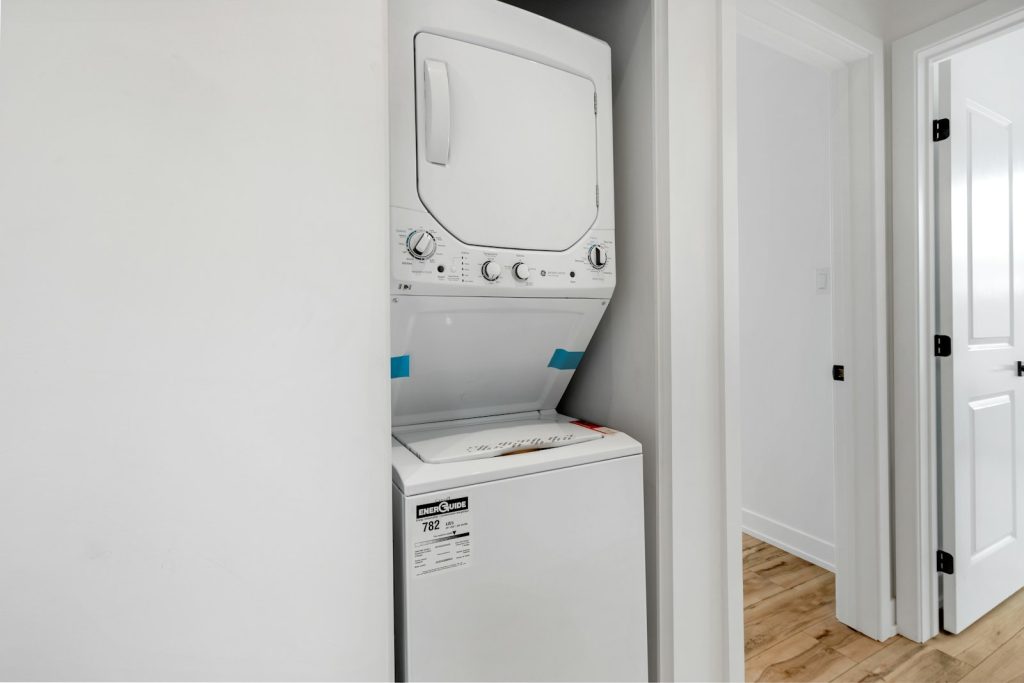
Stackable and combination washer-dryer units share a tighter footprint that can make vent runs shorter but also more prone to sharp bends where the duct exits the wall. If you have a stacked configuration in a closet, pay particular attention to the vent path immediately behind the unit, since installers sometimes compromise on duct routing in tight spaces in ways that create the exact restriction points described above, shortening the interval between vent cleanings compared to a standalone dryer with a straight duct run.
Booking a Repair
Thermal fuses, heating elements, and igniters are all accessible and testable repairs for an experienced technician, and our team carries these parts from trusted parts suppliers for most KitchenAid dryer models. Compare costs in our dryer repair cost guide, check your model on our models page, and schedule service. For manufacturer specs, visit kitchenaid.com.