TL;DR: In the KICU509XBL vs KICU569XBL choice, width is the main difference. The KICU509XBL is a 30-inch, four-element induction cooktop in the Architect Series II line. The KICU569XBL is a 36-inch cooktop with a dual element (12 inch and 9 inch, 4800 and 2500 watts), twelve power levels and a bridge function that joins two elements for big cookware. Choose the 30-inch for a standard opening and everyday cooking, and the 36-inch if you routinely use large pans and have the counter space.
What is the real difference between the KICU509XBL and the KICU569XBL?
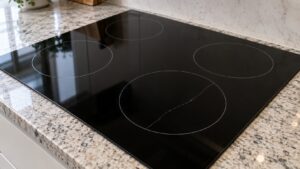
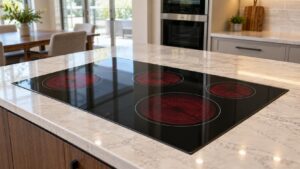
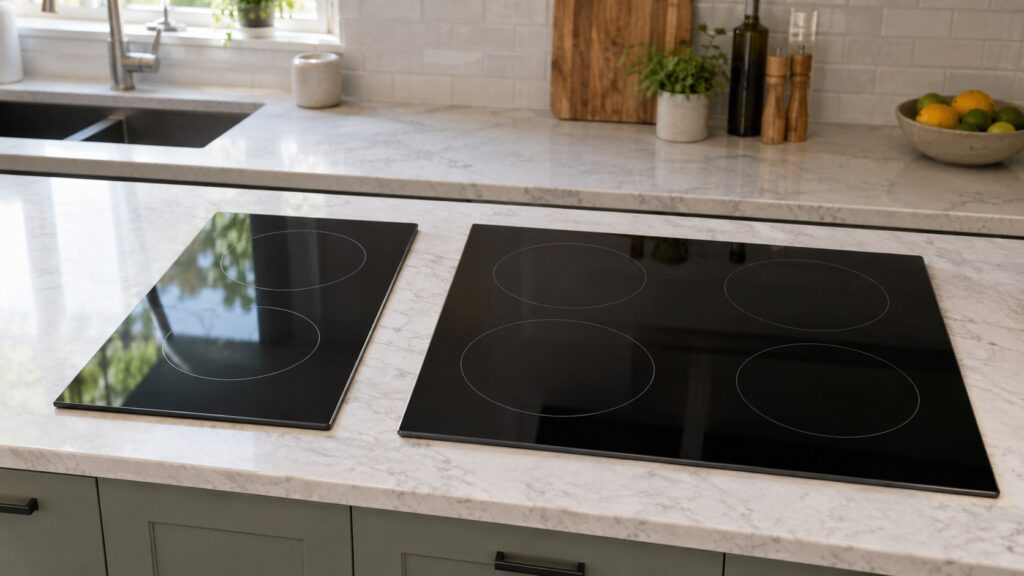
Both are black induction cooktops that heat the pan directly with an electromagnetic field, so neither one has a flame, a hot coil or a glowing ring. The difference is size and layout. The KICU509XBL is 30 inches wide with four elements, which suits a standard cooktop opening and a household that cooks with one to three pans at a time. The KICU569XBL is 36 inches wide and adds a large dual-size element and a bridge zone, which suits a household that cooks for a crowd or uses a griddle, a roasting pan or a long fish poacher.
Everything else follows from that. A wider cooktop needs a wider cutout, a heavier electrical load, and, in most kitchens, a different hood. If you are replacing a 30-inch cooktop and the cabinet is built for 30 inches, the 36-inch model is not a swap; it changes the counter.
Which one handles big cookware better?
The KICU569XBL, clearly. Its dual element offers a 12-inch outer ring with 4800 watts on tap, plus a smaller 9-inch ring at 2500 watts, so you can match the heated area to the pan. The bridge function goes further: it joins two adjacent elements into one long cooking zone, which is how induction handles a rectangular griddle or a large oval roaster without cold spots at the ends. With twelve power levels you can hold a gentle simmer, then step up for a quick boil without leaping between two coarse settings.
The KICU509XBL gives you precise power-level control as well, and it still boils water quickly because induction is fast. What it does not have is a dedicated large-pan zone. If most of your pans are 10 inches or smaller, you may never miss one.
Which one fits your kitchen and your wiring?
Measure before you fall in love with either. The cutout dimensions, the clearance behind and below the cooktop and the allowed distance from the wall differ between a 30-inch and a 36-inch model, and an induction cooktop also needs airflow underneath for its cooling fan. Do not stack drawers or storage tight against the underside unless the installation sheet allows it. Our cooktop installation and setup guide lists what to check.
The electrical supply is the other thing to verify. Induction cooktops draw serious power, and the 36-inch model with its 4800-watt zone draws more than a typical 30-inch one. The rating plate and installation instructions give the circuit requirements for each model, and an electrician should confirm that your panel can supply them. The KICU509XBL is usually the easier swap if you are upgrading from an electric radiant cooktop of similar width.
What do you need to cook on either one?
Magnetic cookware. Cast iron, enameled cast iron and most stainless steel pans with a magnetic base work. Pure aluminum, copper and glass do not unless the base has a magnetic layer. A refrigerator magnet is the quick test: if it grips the bottom of the pan firmly, the pan will heat. Flat, smooth bases give the best contact, which also protects the glass. For the reasoning behind this, read how induction cooktops work, and for the bigger fuel decision see gas, electric and induction cooktop types.
Which one is easier to live with if something goes wrong?
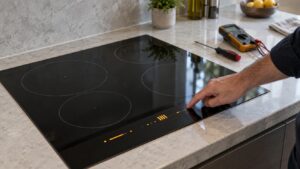
They share a control philosophy, so the fault codes you might see are in the same family. We already cover the KICU569XBL fault display in the KICU569XBL error code guide, and a code on the KICU509XBL points to the same kinds of causes: a sensor, a power module or the control board. Since both are built-in units, serviceability is about access: how easily a technician can reach the underside through the cabinet. Leave that space open when you plan the installation.
For wider design context, Architect Series versus Pro Line explains where this styling sits in the KitchenAid lineup. If you already own one and a zone misbehaves, our KitchenAid cooktop repair page describes what a visit covers, and you can book a visit once you know the model.
So which should you buy?
Buy the KICU509XBL if your opening is 30 inches, you cook with a few standard pans and you want a simpler, more compact cooktop. Buy the KICU569XBL if you have 36 inches of counter and the wiring for it, and you want a large-pan zone, a bridge and twelve power levels. If you are undecided, count the pans you actually use at once and the largest one in the cabinet; that answer settles it more reliably than the spec list.
One more practical point is the hood. A 36-inch cooktop wants a hood at least as wide as the cooking surface so steam and grease are captured at the edges, and a bigger hood means a larger duct and more make-up air. Our guide to range hood venting requirements shows how that choice ripples through the rest of the kitchen. Factor that into the budget before you pick the wider cooktop, because the extra width often costs more in ventilation than in the cooktop itself.