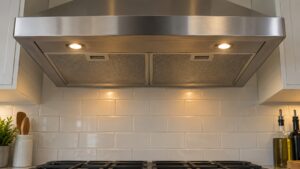
This guide explains the Kitchenaid Range Hood Fan-Nogo Error: what it means, what causes it, and how to resolve it safely.
Understanding the Kitchenaid Range Hood Fan-Nogo Error
Below, our specialists break down everything you need to know about the Kitchenaid Range Hood Fan-Nogo Error.
Understanding the Kitchenaid Fan-Nogo Error
Below, our specialists break down everything you need to know about the Kitchenaid Fan-Nogo Error.
What FAN-NOGO means on your KitchenAid range hood
Seeing FAN-NOGO on the display panel of a KitchenAid range hood means the unit’s self-monitoring logic has identified fan Motor Will Not Start. FAN-NOGO describes a condition where the range hood blower fails to start when switched on. The motor may hum, click, or be completely silent but produces no airflow. That finding is exactly what triggers the KitchenAid FAN-NOGO error.
A quick reset rarely settles the matter here: A power cycle does not repair a failed capacitor, seized bearing, or mechanical obstruction. Physical repair is required. The rest of this guide walks through the symptoms you’d expect to see alongside it, the components most commonly responsible, and what a technician checks before recommending a repair.
Symptoms
The code rarely appears in isolation — here’s what else tends to show up alongside it:
- The hood control panel or button lights up with the FAN-NOGO indicator
- Fan speed drops, becomes inconsistent, or the motor fails to start
- Cooking odors, smoke, or steam linger in the kitchen instead of being pulled out
Common causes
Several unrelated problems can trigger this identical readout, so it pays to check them in order:
- Failed motor start capacitor shows up often behind this code. The start capacitor provides the phase shift needed to start a single-phase induction motor. When it fails, the motor hums but cannot start. Start capacitor failure is the most common range hood motor issue. Diagnosing this reliably usually requires test equipment a typical kitchen doesn’t have on hand.
- Seized motor bearing is one of the more frequent triggers. Years of grease vapor exposure without adequate cleaning can cause the motor bearing to seize. Once seized, the motor cannot rotate even with a good start capacitor. Left to a specialist, this is usually confirmed with a multimeter or manufacturer diagnostic mode rather than guesswork.
- Technicians also see fan blade jammed by debris or grease buildup lead to this code. Heavy grease buildup on the fan blade, or a foreign object in the housing, can physically prevent the blade from rotating. Common on hoods that have gone years without thorough cleaning. This is one you can often rule out yourself before calling anyone.
Troubleshooting steps you can try
Start with the simplest checks first. Each of the following is safe on a KitchenAid range hood and can point you toward the failing part.
- Turn off the hood and inspect for obvious obstruction — Switch off the hood power at the wall switch or breaker. Remove the grease filters and look at the fan blade area from underneath. Check for obvious debris, heavy grease buildup, or anything jamming the blade rotation. Never reach into the blade area with the power on. Always disconnect power before inspecting the blower compartment.
- Clean grease buildup around the fan blade: If visible grease buildup is obstructing rotation, clean the blade and surrounding housing with a degreasing cleaner and warm water. Dry thoroughly before restoring power. Try the fan again. Heavy long-term grease buildup may require scraping or soaking with a strong degreaser — patience is important to avoid damaging the blade balance.
When to call a technician
Hand the range hood over to a qualified technician in these situations:
- Motor replacement required after start capacitor test failed
- Seized bearing confirmed by attempting manual rotation
- Heavy grease contamination requiring full disassembly
Because this code reflects a real hardware or sensor condition rather than a passing glitch, repeated resets won’t resolve it on their own. If you’d rather not troubleshoot a KitchenAid range hood yourself, schedule a visit with our team, or browse our full error code library for related problems. For manufacturer specifications on your exact model, KitchenAid’s own site at kitchenaid.com is a useful reference, though our technicians are independent specialists and not affiliated with the manufacturer.
Before any appointment, jot down the exact code text, when it first appeared, and what you already tried — that short history lets an experienced technician arrive with the likely part already in hand instead of needing a second visit just to diagnose the problem.