
This guide covers Kitchenaid Refrigerator Not Cooling with practical, technician-backed advice.
When a KitchenAid refrigerator stops cooling, the most common causes are a dirty condenser coil, a frozen or failing evaporator fan motor, a worn start relay on the compressor, or a refrigerant leak somewhere in the sealed system. Warm milk and soft ice cream are usually the first signs something is wrong, and the fix depends heavily on which of these components has failed.
Understanding the Kitchenaid Refrigerator Not Cooling
Below, our specialists break down everything you need to know about the Kitchenaid Refrigerator Not Cooling.
Start With the Condenser Coils
Every refrigerator with FreshFlow airflow technology relies on clean condenser coils to reject heat from the refrigerant loop. On most KitchenAid French-door and side-by-side models, the coils sit behind a removable grille at the base of the unit. Over months of normal kitchen use, dust, pet hair, and cooking grease build up on the coil fins and choke off airflow. When that happens, the compressor runs constantly but can’t shed enough heat, and interior temperatures slowly climb. Pulling the grille and vacuuming the coils with a brush attachment every six months prevents most of this. If the coils are already caked with lint, a thorough cleaning alone often restores cooling within a few hours.
Evaporator Fan and Frost Buildup
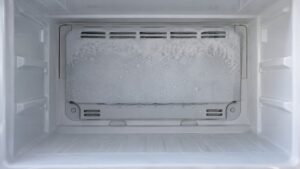
Behind the back panel of the freezer compartment sits the evaporator fan, which pushes cold air throughout both the fresh food and freezer sections. If this fan seizes or its bearings wear out, the freezer may stay reasonably cold while the refrigerator section warms up dramatically, since airflow to the fresh food side depends on that fan. A related issue is a failed defrost heater or defrost thermostat, which allows frost to build up on the evaporator coil until it blocks airflow entirely. Listen for a rattling or clicking noise near the back freezer wall; that is often the first audible clue that the fan or its motor bearings are wearing out.
Compressor and Start Relay Problems
The compressor is the heart of the cooling system, and it depends on a small start relay and overload protector to get running each cycle. When that relay fails, the compressor may hum for a few seconds and then click off repeatedly, a pattern homeowners often describe as the fridge ‘trying to start.’ A multimeter check on the relay and windings can confirm the diagnosis quickly, and in many cases replacing the relay is far cheaper than replacing the compressor itself. A true compressor failure is one of the more expensive refrigerator repairs, which is why our repair guides always recommend ruling out the relay first.
Sealed System Leaks
If coils are clean, the fan spins freely, and the compressor cycles normally but the unit still won’t hold temperature, a refrigerant leak in the sealed tubing is likely. This shows up as gradually worsening cooling over weeks, sometimes accompanied by a faint hissing sound or oily residue near a solder joint. Sealed system work requires EPA-certified handling of refrigerant and specialized brazing equipment, so this repair should always go to an experienced technician rather than a DIY fix.
What to Check Before Calling for Service
- Confirm the temperature control hasn’t been bumped to a warmer setting.
- Check that the door gaskets seal fully and aren’t cracked or pulled loose.
- Make sure nothing is blocking interior air vents, especially large containers pushed against the back wall.
- Vacuum the condenser coils if the unit is more than a year old and hasn’t been cleaned.
When to Bring in a Technician
If basic cleaning doesn’t restore cooling within 24 hours, or you hear clicking from the compressor compartment, it’s time to schedule a diagnostic visit. Our specialist technicians carry common evaporator fans, start relays, and defrost components as trusted parts suppliers’ stock, which keeps most refrigerator repairs to a single visit. You can review typical cost ranges in our refrigerator repair cost guide, browse supported models on our models page, or schedule a visit directly. For general appliance specifications, KitchenAid’s own site at kitchenaid.com is a useful reference, though our technicians are an independent service and not affiliated with the manufacturer.