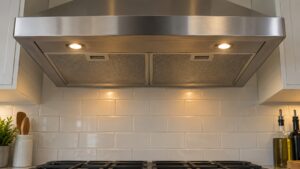
Kitchen ventilation rarely gets attention until it stops working, but the hood over a range does more heavy lifting than most homeowners realize, pulling grease, moisture, and heat out of the air every time a burner runs. KitchenAid’s lineup of hoods reflects that quietly essential role, built to match the same design language as the ranges and cooktops they sit above.
Understanding the Kitchenaid Range Hoods
Below, our specialists break down everything you need to know about the Kitchenaid Range Hoods.
The lineup, style by style
KitchenAid range hoods come in four basic configurations: under-cabinet units mounted beneath standard kitchen cabinetry, wall-mount canopy hoods that sit as a design centerpiece above a range, island hoods suspended from the ceiling over a freestanding cooktop, and downdraft systems that rise from behind the cooktop or retract flush into the counter. Each style solves the ventilation problem differently, and the right choice usually comes down to kitchen layout rather than personal preference; an island cooktop, for instance, simply can’t use a wall-mount hood no matter how much an owner might like the look of one.
Signature technology
The engineering focus across KitchenAid’s ventilation lineup centers on airflow efficiency and noise reduction, with multi-speed blower motors designed to move enough air to clear smoke quickly without turning the kitchen into a wind tunnel at the highest setting. Many models pair this with dishwasher-safe baffle filters rather than disposable mesh, which capture grease more effectively over the appliance’s lifespan and support the LED lighting fixtures built into the underside of most current designs. Units built around the Architect Series aesthetic tend to emphasize a low-profile, minimalist canopy, while Pro Line-oriented hoods are typically paired with higher-output ranges and sized to match a wider cooktop footprint.
Common problems as the hood ages
The parts most likely to fail first are the ones doing the most physical work: the blower motor, which after years of grease exposure can develop bearing wear that shows up as noise well before it stops running entirely, and the LED driver, which tends to fail before the LEDs themselves burn out. Owners also notice speed control issues, where the hood gets stuck on one fan setting, and light switches that stop registering a press because grease has worked its way behind the control membrane. Extraction performance can decline gradually rather than fail outright, which is easy to miss since the fan still runs and sounds normal even as it moves less air through a partially blocked duct or filter. If any of these issues sound familiar, our /services/ page covers what a repair visit involves and what it typically takes to get a hood back to full performance.
Maintenance that actually extends the lifespan
Baffle filters should come out and go through the dishwasher or a degreasing soak roughly once a month during regular cooking, since a clogged filter is the single biggest driver of both reduced extraction and premature motor wear. It’s also worth periodically checking the ductwork for grease buildup and confirming the damper flap at the exterior vent opens fully, since a stuck damper creates the same symptoms as a failing motor but requires a completely different fix. Owners who want to look up their exact hood configuration, blower rating, or duct requirements can check our /models/ directory, and KitchenAid’s own site at https://www.kitchenaid.com publishes current specification sheets by model number for anyone doing a side-by-side comparison before a purchase or replacement decision.
When to call a technician versus troubleshoot yourself
A hood that’s simply loud or slightly less powerful than it used to be is often solvable with a filter clean and a duct check, both reasonable DIY steps for anyone comfortable removing a filter panel. A hood that won’t power on at all, that has a fan stuck at one speed, or that’s making a grinding or rattling noise from inside the housing is a different situation, since those symptoms usually mean a motor or control component has actually failed rather than just needing cleaning. Our /guides/ section has step-by-step instructions for the maintenance tasks worth doing yourself, and a clear line for when it makes more sense to bring in a specialist technician rather than risk damaging a working component while chasing the wrong fix.