This guide explains the Kitchenaid Dishwasher 8-1 Error: what it means, what causes it, and how to resolve it safely.
Understanding the Kitchenaid Dishwasher 8-1 Error
Below, our specialists break down everything you need to know about the Kitchenaid Dishwasher 8-1 Error.
Understanding the Kitchenaid 8-1 Error
Below, our specialists break down everything you need to know about the Kitchenaid 8-1 Error.
What 8-1 means on your KitchenAid dishwasher
At the end of every wash and rinse stage, a KitchenAid dishwasher’s pump switches roles briefly to push used water out through the drain hose, and it’s expected to finish that job within a set amount of time. When it doesn’t, the control board displays the 8-1 code and stops the cycle rather than let a fresh fill layer on top of standing dirty water, which would risk an overflow on the very next stage. Owners typically discover this problem by opening the door to find water pooled at the bottom of the tub instead of a clean, empty basin.
The most common trigger for the KitchenAid 8-1 error isn’t a broken pump at all — it’s a clogged filter or a kinked hose restricting flow enough that the pump simply can’t move water fast enough to hit the deadline. Because the filter assembly is designed for regular home cleaning, checking it first is both the easiest and the most statistically likely fix before assuming a mechanical failure inside the pump itself.
Symptoms
- Standing water left in the tub at the end of a completed or interrupted cycle
- Dishwasher makes a straining or humming noise during the drain stage without actually draining
- Musty odor building up from water sitting in the tub between uses
- Display shows a repeating 8-1 pattern near the end of a cycle
- Slow gurgling sounds from the sink or garbage disposal during dishwasher operation
Common causes
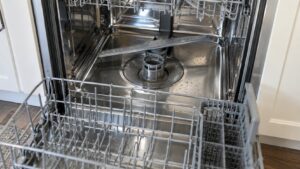
- The cylindrical and flat filter screens at the bottom of the tub have become packed with food debris, restricting flow into the drain pump
- The corrugated drain hose running from the pump to the sink drain or garbage disposal has developed a kink, a clog, or has lost the high loop it needs to prevent backflow
- The drain pump’s impeller has seized on a foreign object, or the motor windings inside the pump have burned out, so no drainage can occur at all
Troubleshooting steps you can try
- With the dishwasher off, remove the lower rack, then turn the cylindrical filter counterclockwise to unlock and lift it out along with the flat mesh filter sitting beneath it.
- Rinse both filter pieces thoroughly under warm running water, using a soft brush to work loose any trapped food pulp, since this is the single most common cause of drain trouble on these machines and is worth doing monthly as routine maintenance.
- Reinstall both filters securely, making sure the cylindrical filter locks back into place, then run a drain-only cycle to see whether flow is restored.
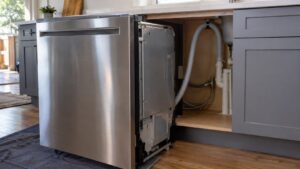
- Next, open the cabinet under the sink and follow the corrugated drain hose from the back of the dishwasher to its connection point, checking for sharp kinks, visible clogs, or a connection that has slipped loose.
- Confirm the hose rises into a high loop, at least about 20 inches above the floor, before descending to the drain connection, since a missing high loop allows water to siphon backward and can mimic a pump failure.
When to call a technician
Certain dishwasher conditions are not safe or practical to fix yourself — call a professional if:
If these checks do not clear the 8-1 code on your dishwasher, the problem likely sits in a component that needs a specialist. Book a KitchenAid repair online, browse related error codes, or see product details at kitchenaid.com.