TL;DR: Understanding how a KitchenAid dishwasher drains makes the 8-1 code far less mysterious. At the end of each wash and rinse stage, the pump stops circulating water and starts pushing it out through the filters, the pump and a corrugated hose that rises into a high loop before reaching the sink drain or garbage disposal. The control board allows a set time for that job. If water is still sitting in the tub when time is up, it halts the cycle and shows 8-1.
What happens inside the dishwasher when the water drains?
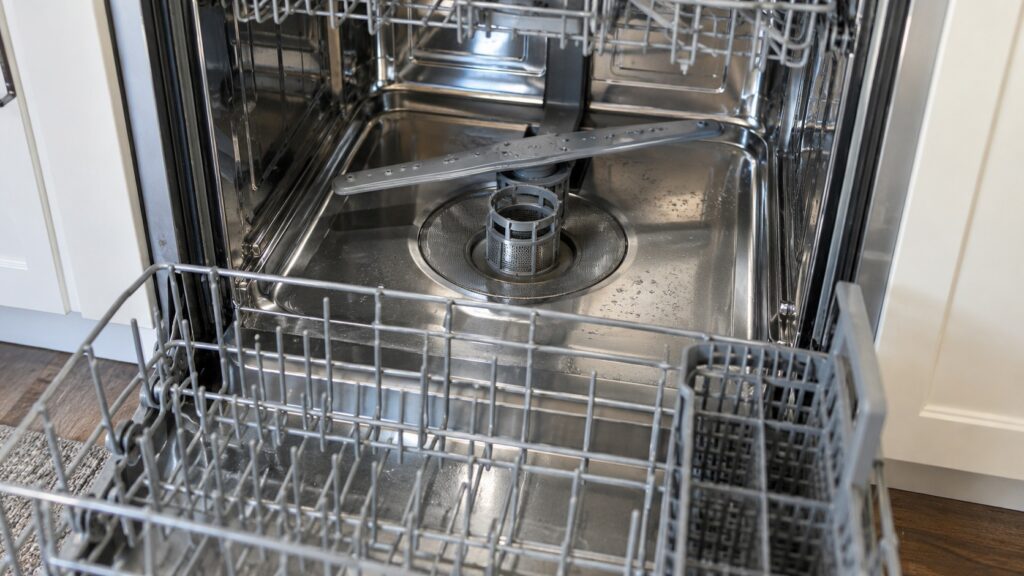
Draining is a change of job for the same pump. During a wash, the pump pulls water from the sump at the bottom of the tub and pushes it up to the spray arms again and again. When the control board calls for a drain, the pump switches roles: instead of sending water up to the arms, it sends it out of the machine. The water leaves the tub through the filter assembly at the bottom, which is why a dishwasher with a clogged filter drains slowly and one with a clean filter does not.
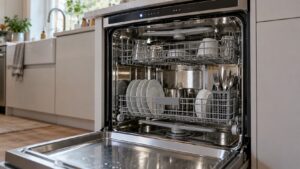
A KitchenAid dishwasher does this at the end of the wash and again after each rinse stage, so a typical cycle drains several times. Every drain has to finish before the next fill begins. If it did not, fresh water would pile on top of dirty water and could overflow, which is exactly what the control board is designed to prevent.
You can hear the sequence if you stand next to the machine. The spray noise stops, there is a brief pause, and then the pump note changes to a lower, steadier hum as water leaves. Gurgling in the sink during that moment is normal. A pump that hums hard but never seems to move water, or a drain stage that drags on for minutes, is the early warning that something in the path is restricting the flow, well before the code appears.
Why do the two filters matter so much?
The cylindrical filter and the flat mesh filter underneath it are the gatekeepers. Food pulp, seeds, small bits of paper label and broken glass can all arrive in the sump. The filters stop them so the pump only sees water. When the screens pack with debris, the pump has to pull through a narrow gap, the flow drops, and the drain takes longer than the control allows. The owner-level fix is to turn the cylindrical filter counterclockwise, lift it out with the mesh beneath it, rinse both under warm water with a soft brush and refit them until they lock.
The same filters keep soil off your dishes, so a monthly rinse helps cleaning as well as draining. Our guide to cleaning a dishwasher filter shows the routine in detail.
Why does the drain hose have a high loop?
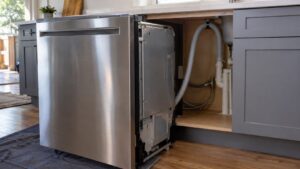
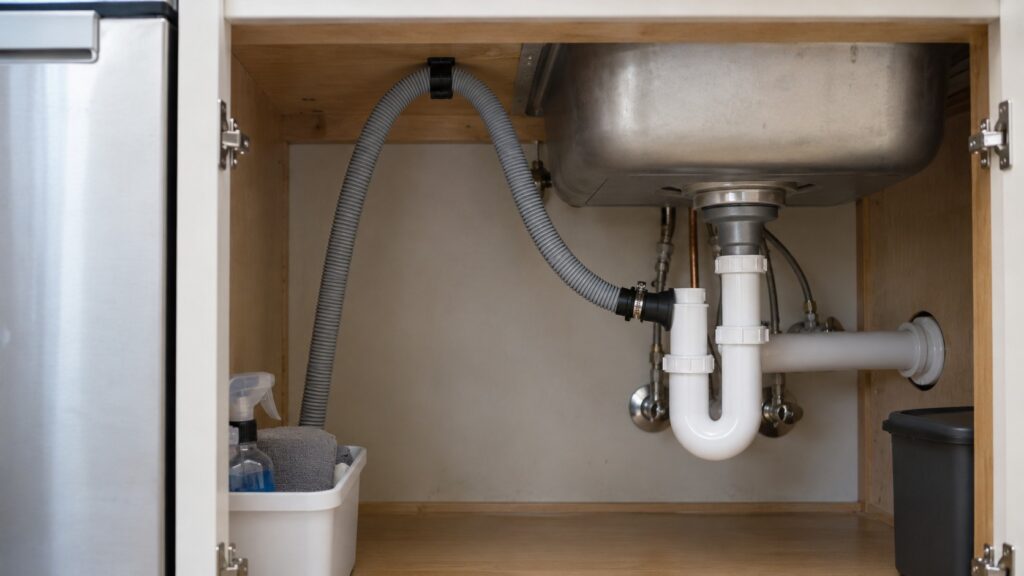
Under the sink, the corrugated hose from the pump runs to the drain connection or the garbage disposal inlet. It needs to rise into an inverted U at least about 20 inches above the floor before it descends. That arch is the high loop. It keeps water from the sink or disposal from siphoning backward into the dishwasher when the sink is full, and it keeps the dirty water in the hose from running back into the tub after a cycle.
Two installation details matter here. The hose must not be kinked or crushed by the cabinet, because a pinched hose cuts the flow just as a blocked filter does. And if the dishwasher drains into a disposal, the knockout plug inside the disposal inlet must have been removed during installation, or the water has nowhere to go. Our dishwasher installation and setup guide covers both.
What does the 8-1 code actually tell you?
The code means the drain pump could not clear the tub inside the time the control allows. It does not mean the pump is broken. Most often the cause is the plain stuff described above: clogged filters, a kinked hose, or a missing high loop that lets water creep back. The telltale signs are standing water at the bottom of the tub, a humming or straining pump during the drain stage, a musty smell from water sitting between cycles, and gurgling at the sink or disposal while the machine runs.
Only after those are ruled out do the mechanical causes come up: an impeller seized on a foreign object, or a pump motor that has burned out. At that point a technician should take over, because the pump sits in the base of the machine with water and electricity in close quarters. If you want the wider picture of what a blocked dishwasher looks like, see dishwasher not draining, and for the other codes on one model, the KDFM404KPS code guide.
Which KitchenAid dishwashers does this apply to?
The drain path is the same in principle across the line. The site lists 8-1 against the KDFS424SPS, KDTM404KPS, KDFE204KPS, KDFM404KPS and KDFE204KBL, and the filters, hose and loop are the parts to check on any of them. When a rinse of the filters and a look at the hose do not fix it, KitchenAid dishwasher repair is the next step, and you can book a visit with the model number ready.