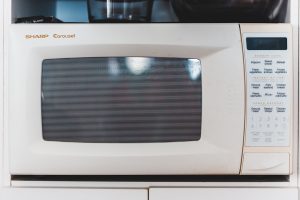

TL;DR: The KitchenAid KMHC319LSS is an over-the-range microwave, which means it also does the cooktop’s exhaust work through its own grease and charcoal filters — a job separate from heating food. Skipping filter maintenance on this model does not just make the microwave less effective as a vent; it lets grease build up around the motor and vent path, which is one of the more common reasons an over-the-range unit eventually needs a fan or motor repair that has nothing to do with the microwave function at all.
Why does an over-the-range microwave like the KMHC319LSS need filter maintenance at all?
The KMHC319LSS is a 30-inch over-the-range microwave that also performs the cooktop’s ventilation function, drawing cooking exhaust up through a grille beneath the unit. That dual role means it collects airborne grease the same way a dedicated range hood does, even though most owners think of it primarily as a microwave. The grease filter sitting behind that grille is what catches the bulk of that airborne grease before it reaches the fan motor and the rest of the vent path. Ignore that filter long enough, and the grease it was supposed to intercept ends up coating the fan blades and motor housing instead — parts that were never designed to be cleaned of grease buildup and that are far more expensive to service than a filter is to wash.
How often should the grease filter be cleaned on this model?
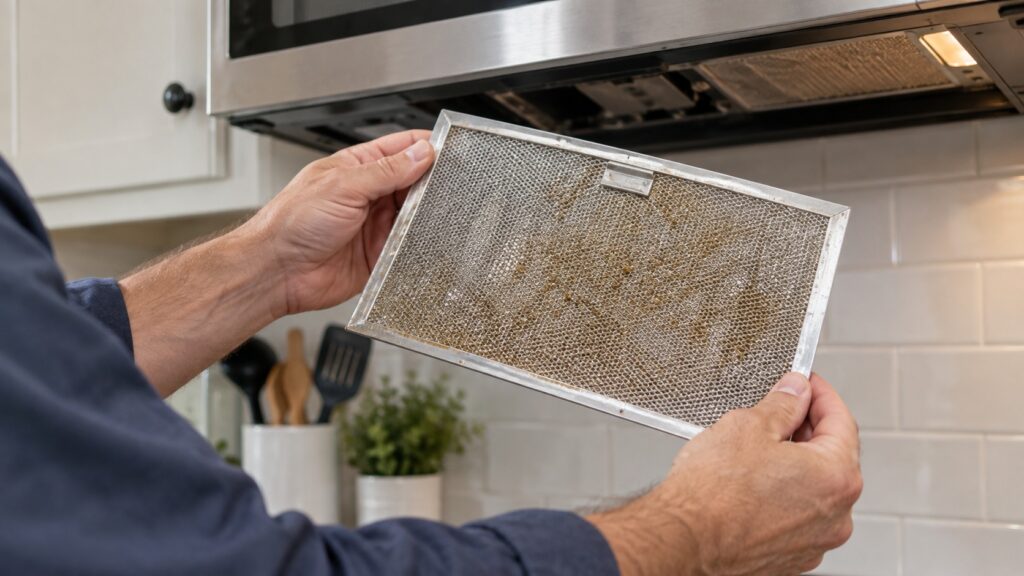
A monthly wash is the reasonable baseline for typical household cooking, and that interval should shorten considerably for a household that fries, sears or cooks with a lot of oil regularly — sometimes to every two weeks. The filter is usually a metal mesh panel that slides or unclips from beneath the grille without tools. It can be washed by hand with hot water and dish soap, or run through a dishwasher cycle on many models, though checking the model’s own care instructions before the first dishwasher wash is worth the few minutes it takes. A grease filter that looks dull gray or feels sticky rather than metallic and clean has already gone past due for a wash.
What does the charcoal filter do, and does every KMHC319LSS need one?
The charcoal filter’s job is odor absorption, and it only matters if the unit is installed in recirculating (non-ducted) mode rather than vented outside through ductwork. A ducted installation sends cooking exhaust — and its odor — straight outside, so the charcoal filter plays a much smaller role there. A non-ducted installation instead pulls air through the grease filter, through the fan, and back out into the kitchen, which means the charcoal filter is the only thing removing odor from that recirculated air. Unlike the grease filter, a charcoal filter cannot be washed and reused; once its carbon has absorbed as much odor as it can, replacing it is the only option, typically on a roughly six-month interval for normal use.
If you are not sure which mode your installation uses, check whether ductwork runs from the unit to an exterior wall or roof. No visible duct connection almost always means recirculating mode, and the charcoal filter schedule applies in full.
What happens if the filters are neglected for a long time?
The clearest sign of a long-neglected grease filter is reduced airflow that shows up gradually rather than all at once — the fan runs, but steam and smoke linger in the kitchen longer than they used to. Behind that symptom, grease has typically built up enough to coat the fan blades themselves, which adds resistance the motor has to work against and can shorten the motor’s working life. In recirculating installations, a long-neglected charcoal filter produces a more noticeable symptom: cooking odors that used to clear within an hour now linger for most of the day, even though the fan sounds and feels the same as always. Neither of these problems announces itself with a fault code — they show up as a slow decline in performance that is easy to attribute to the appliance getting older rather than to two filters that were simply overdue.
Does filter neglect ever affect the microwave’s cooking function?
Not directly. The grease and charcoal filters sit in the ventilation path, which is largely separate from the magnetron and cooking circuitry that heat food. A dirty filter does not make food cook unevenly or reduce microwave power. What it can eventually affect is the fan motor’s reliability, and in more extreme cases of heavy, longstanding grease buildup, airflow restriction around internal components that were designed to run with a certain amount of ventilation. If your KMHC319LSS is not heating food properly, that points toward the microwave’s own systems rather than the filters — see our guide to microwave not heating for that separate set of causes.
What is the simplest maintenance routine to follow for this model?
- Wash the grease filter monthly, or every two weeks with heavy frying or searing use, and let it dry fully before reinstalling it.
- Check duct connection status once, at installation or during your next filter wash, so you know whether the charcoal filter schedule applies to your unit at all.
- Replace the charcoal filter roughly every six months if the unit runs in recirculating mode, on a reminder rather than waiting for lingering odor to prompt it.
Following this KMHC319LSS filter maintenance routine is the single easiest way to avoid an unnecessary fan or motor repair later. For the broader care schedule covering the rest of the microwave beyond ventilation, see our guide to how to maintain your KitchenAid microwave. If the fan has become noticeably weaker or noisier despite clean filters, our KitchenAid microwave repair technicians can inspect the motor and vent path directly. Schedule a visit if cleaning both filters has not restored normal airflow.