
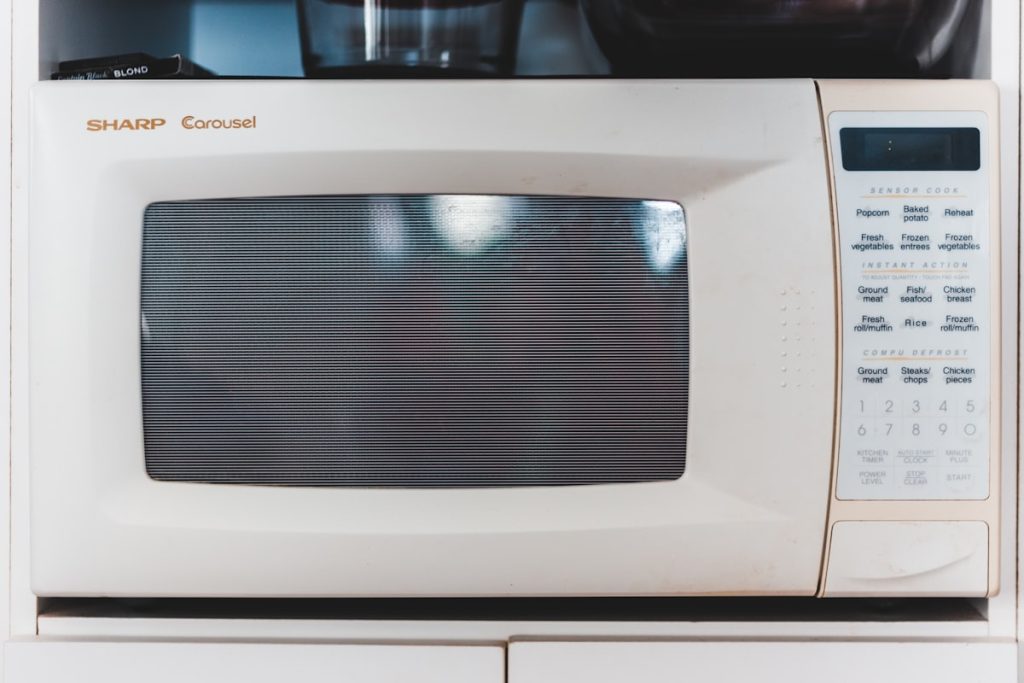
Repairing a KitchenAid microwave is usually worthwhile when the issue involves a door switch, a keypad, a turntable motor, or a light bulb and fan assembly — all relatively inexpensive fixes on a unit with reasonable remaining life. Replacement tends to be the better option when the magnetron itself has failed, particularly on an older unit, since magnetrons are one of the pricier individual components and microwaves as a category have a shorter expected lifespan than most other kitchen appliances.
Understanding the Kitchenaid Microwave
Below, our specialists break down everything you need to know about the Kitchenaid Microwave.
Why Microwaves Have a Shorter Repair Threshold
Compared to a range, oven, or refrigerator, microwaves generally have a shorter useful life, often in the range of 9 to 12 years with regular use. This shorter lifespan changes the math on repair decisions. A repair that would clearly make sense on a refrigerator with 15 years of expected service can be a much closer call on a microwave, especially a built-in or over-the-range model where a meaningful repair cost is being weighed against a unit that may only have a few more years of expected service left regardless.
Door Switches and Interlocks Are the Most Common Repair
The most frequent microwave repair involves the door switches, sometimes called interlocks, which are safety mechanisms that prevent the microwave from operating unless the door is fully closed. These switches see constant mechanical use every time the door opens and closes, and they are a common wear item. Fortunately, they are also one of the most affordable and quick repairs available, typically not requiring extensive disassembly, which makes this an easy repair decision on almost any age of unit.
Magnetron Failures Are a Different Story
The magnetron is the component that actually generates the microwave energy used for cooking, and it is both one of the more expensive individual parts and one that naturally degrades over years of use. A microwave that runs, turns the turntable, and lights up but does not actually heat food is a classic sign of a failing magnetron. Given the combination of a relatively high part cost and the microwave’s generally shorter overall lifespan, replacing a failed magnetron on a unit that is already several years old is often not the most cost-effective path compared to purchasing a new unit.
Built-In and Over-the-Range Installation Factors
Many KitchenAid microwaves are installed as built-in units above a range or integrated into cabinetry, and this changes the replacement calculation somewhat. A built-in replacement needs to match the existing cutout dimensions and venting configuration, which can limit your options or require a technician to also handle the physical installation and venting connection rather than a simple countertop swap. This installation complexity is worth factoring in — sometimes it tips the decision toward repair even for a moderately costly fix, simply to avoid the disruption and potential cabinetry modification of a full replacement.
Countertop Microwaves Offer More Replacement Flexibility
Not every KitchenAid microwave is a built-in unit — countertop models offer far more flexibility when replacement becomes the right call, since there is no cutout dimension or venting connection to match. If your microwave is a standalone countertop model rather than a built-in or over-the-range unit, the calculus shifts somewhat toward replacement being simpler and less disruptive, particularly for a magnetron failure on a unit that is already several years old, since a countertop swap can typically be done in minutes rather than requiring a scheduled installation appointment. Drawer-style microwaves installed beneath a counter sit somewhere in between, since they still require matching an existing cutout, but the installation is generally less involved than an over-the-range unit tied into shared ductwork with a range hood, which is worth keeping in mind when comparing repair costs across different microwave styles in your kitchen.
Getting an Informed Recommendation
A quick diagnostic check can usually tell you within minutes whether you are dealing with an affordable switch or fuse issue or a magnetron failure that changes the economics of the decision. For related kitchen appliance decisions, see our oven repair-or-replace guide and our range hood repair-or-replace guide if your over-the-range microwave also handles ventilation. Current KitchenAid microwave models and installation specifications are available at kitchenaid.com.