This guide covers Kitchenaid Range Hood Fan Or with practical, technician-backed advice.
When a KitchenAid range hood’s fan or light stops working, the cause is generally narrow and inexpensive to fix: a worn-out blower motor, a failed rocker or capacitive touch switch, a blown light bulb or its driver board, or in rarer cases a tripped circuit shared with the cooktop below. Because the fan and light are electrically separate circuits on most models, a failure in one rarely explains a failure in the other.
Understanding the Kitchenaid Range Hood Fan Or
Below, our specialists break down everything you need to know about the Kitchenaid Range Hood Fan Or.
Fan Motor Wear and Failure
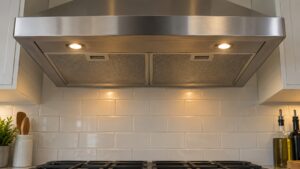
The blower motor inside a range hood works continuously against grease-laden air, and over years of cooking that grease accumulates on the motor housing and fan blades, adding load and eventually causing bearing wear or motor burnout. A fan that runs slower than it used to, makes a grinding or humming noise, or shuts off intermittently before failing completely is showing classic signs of motor wear. Regularly removing and washing the grease filters, covered in our range hood maintenance guide, significantly extends motor life by reducing the load the fan has to work against.
Switch and Control Panel Failures
Range hood controls range from simple rocker switches to capacitive touch panels, both of which can fail independently of the motor itself. Grease and moisture are the primary killers of touch-panel controls specifically, since they’re mounted directly beneath rising cooking vapor. If the fan runs fine at one speed but not others, or the light works but the fan doesn’t respond to any button, the switch or control board rather than the motor is the likely culprit.
Light Bulb and Driver Board Issues
LED range hood lighting, standard on most current KitchenAid hoods, uses a small driver board to convert household voltage to the LED’s operating voltage. When an LED light fails, it’s often the driver board rather than the LED itself, since LEDs are typically rated for tens of thousands of hours. A quick way to distinguish the two: if the light flickers before going dark, suspect the driver; if it goes out instantly with no warning, either could be responsible and testing is needed.
Shared Circuit and Breaker Issues
Some range hood installations, particularly under-cabinet and downdraft models, share a circuit or junction box with the cooktop or nearby outlets. If both the range hood and another kitchen appliance lose power simultaneously, check the breaker panel before assuming a hood-specific failure.
Quick Checks Before Calling for Repair
- Remove and wash the grease filters, which can restrict a fan enough to seem like a failure.
- Test all fan speed settings individually to isolate a switch issue from a motor issue.
- Confirm the light bulb or LED module isn’t simply loose in its socket.
- Check the breaker panel if both the fan and light are completely dead.
Ducted vs Ductless Hood Differences
Ducted range hoods vent grease-laden air outside through ductwork, while ductless models recirculate air through a charcoal filter back into the kitchen. A ductless hood that seems weak even with a healthy motor may simply have a saturated charcoal filter restricting airflow, a maintenance issue rather than a mechanical failure, and one that’s easy to overlook since charcoal filters aren’t washable and need periodic replacement rather than cleaning. Confirming which type you have before troubleshooting airflow complaints saves a wasted service call for what might just be an overdue filter swap.
Downdraft Ventilation Systems
Some KitchenAid kitchens use a downdraft ventilation system built into or beside the cooktop rather than an overhead hood entirely. These systems rely on a motor mounted below the counter, often in the cabinet space beneath the cooktop, and troubleshooting a fan failure on a downdraft unit means accessing that lower cabinet rather than a hood housing above. If you have a downdraft system and the fan has stopped, checking the motor compartment access panel beneath the cooktop is the equivalent first step to removing an overhead hood’s cover.
Scheduling a Repair
Blower motors, switches, and driver boards are all straightforward replacements for an experienced technician, and our team stocks common parts for KitchenAid range hoods from trusted parts suppliers. Review our range hood services, check compatibility on our models page, and schedule a visit when you’re ready to get it fixed. Manufacturer specifications for current range hood lineups are available at kitchenaid.com.