This guide explains the Kitchenaid Refrigerator Re Error: what it means, what causes it, and how to resolve it safely.
Understanding the Kitchenaid Refrigerator Re Error
Below, our specialists break down everything you need to know about the Kitchenaid Refrigerator Re Error.
Understanding the Kitchenaid Re Error
Below, our specialists break down everything you need to know about the Kitchenaid Re Error.
What rE means on your KitchenAid refrigerator
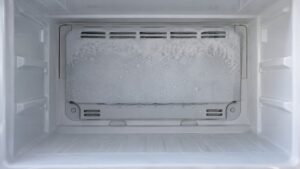
A rE readout on a KitchenAid refrigerator isn’t random — the KitchenAid rE error is generated only when the onboard electronics detect a specific condition tied to defrost System Error. rE on KitchenAid refrigerators indicates the adaptive defrost system did not complete a defrost cycle within the maximum allowed time. Frost is accumulating on the evaporator coil faster than the heater can remove it.
This is one of the more forgiving codes to deal with initially — a forced defrost cycle clears accumulated frost and allows the rE code to reset. However, if the defrost heater or thermostat is failed, frost will rebuild within 24–72 hours and rE will reappear. The rest of this guide walks through the symptoms you’d expect to see alongside it, the components most commonly responsible, and what a technician checks before recommending a repair.
Symptoms
The code rarely appears in isolation — here’s what else tends to show up alongside it:
- The display shows the rE code, sometimes flashing or alternating with the temperature readout
- Fresh food or freezer temperatures drift away from the set point
- You may notice unusual fan noise, silence where airflow should be, or warm spots inside the cabinet
- The refrigerator may cycle the compressor more frequently than normal
Common causes
The underlying cause is not always the same appliance component — here’s what we see most:
- Another common contributor is failed defrost heater or thermal fuse. The resistance heater that melts frost from the evaporator coil has burned out, or the inline thermal fuse protecting it has opened. Neither can be reset — replacement is required. This is one you can often rule out yourself before calling anyone.
- Defective defrost thermostat or bi-metal limit thermostat — The thermostat that signals the heater to shut off when the coil reaches the target temperature has failed open, preventing the defrost cycle from initiating even when the timer calls for it. This is one you can often rule out yourself before calling anyone.
- Another common contributor is failed adaptive defrost control logic on main board. The main board’s defrost timer logic or EEPROM-stored adaptive defrost data has corrupted, causing the board to skip defrost cycles or terminate them prematurely. Diagnosing this reliably usually requires test equipment a typical kitchen doesn’t have on hand.
Troubleshooting steps you can try
Try the following in the order shown. They are safe for most refrigerator owners and help confirm whether the issue is a quick fix or needs a specialist.
- Initiate a forced defrost cycle — On most KitchenAid French Door and Architect Series models, hold the refrigerator and freezer temperature buttons simultaneously for five seconds to enter diagnostic mode, then select forced defrost (consult your model’s service sheet for the exact key sequence). Allow the defrost cycle to run to completion. A successful forced defrost will bring the evaporator coil to approximately 50–55°F — you will hear dripping water in the drain pan underneath. If no heat is felt at the evaporator after 20 minutes, the heater has likely failed.
- Inspect the drain tube for ice blockage: After a defrost, check that melt water drains freely through the tube to the drain pan. Pour a small cup of warm water into the drain opening in the freezer floor — it should drain away within 10 seconds. A slow drain indicates an ice plug blocking the tube. A turkey baster filled with warm water is the safest tool for clearing a mildly frozen drain tube without risk of damaging the drain components.
When to call a technician
It is time to stop DIY and schedule service on this refrigerator when you notice:
- Defrost heater measures open circuit on continuity test
- Thermal fuse reads open (no continuity)
- Forced defrost cycle completes but coil re-frosts within 24 hours
Since this particular code often clears with a simple reset, give that a try first — but don’t keep resetting past the point where the same problem keeps returning within a day or two. If you’d rather not troubleshoot a KitchenAid refrigerator yourself, schedule a visit with our team, or browse our full error code library for related problems. For manufacturer specifications on your exact model, KitchenAid’s own site at kitchenaid.com is a useful reference, though our technicians are independent specialists and not affiliated with the manufacturer.
Before any appointment, jot down the exact code text, when it first appeared, and what you already tried — that short history lets an experienced technician arrive with the likely part already in hand instead of needing a second visit just to diagnose the problem.