This guide explains the Kitchenaid Refrigerator De Error: what it means, what causes it, and how to resolve it safely.
This guide explains the Kitchenaid De Error 2: what it means, what causes it, and how to resolve it safely.
Understanding the Kitchenaid Refrigerator De Error
Below, our specialists break down everything you need to know about the Kitchenaid Refrigerator De Error.
Understanding the Kitchenaid De Error 2
Below, our specialists break down everything you need to know about the Kitchenaid De Error 2.
What dE means on your KitchenAid refrigerator
Refrigerator owners who spot a dE code on the console are looking at a targeted diagnostic message, not a generic glitch. dE on KitchenAid refrigerators signals that the defrost cycle sensor detected the evaporator did not reach the target termination temperature within the allowed time, indicating a heater output or sensor failure. That specific finding produces the KitchenAid dE error.
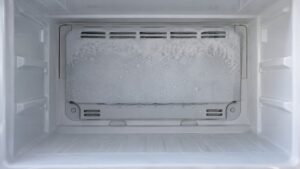
The good news is this problem is usually clearable without a service visit: A manual defrost clears accumulated frost and resets the dE code temporarily. The problem will return when the next defrost cycle fails, typically within 24–72 hours. The rest of this guide walks through the symptoms you’d expect to see alongside it, the components most commonly responsible, and what a technician checks before recommending a repair.
Symptoms
A handful of everyday clues usually accompany this code:
- The display shows the dE code, sometimes flashing or alternating with the temperature readout
- Fresh food or freezer temperatures drift away from the set point
- You may notice unusual fan noise, silence where airflow should be, or warm spots inside the cabinet
- The refrigerator may cycle the compressor more frequently than normal
Common causes
The underlying cause is not always the same appliance component — here’s what we see most:
- Technicians also see defrost termination thermostat stuck open lead to this code. The bi-metal thermostat that ends the defrost cycle when the coil warms to target temperature has failed in the open position, preventing the heater circuit from energizing. This is one you can often rule out yourself before calling anyone.
- Another common contributor is weak or partially failed defrost heater. The heater element has developed a high-resistance section and delivers insufficient wattage to fully clear the coil within the allotted window, triggering dE at cycle end. Worth ruling this out first since it costs nothing but a little time.
- Another common contributor is defrost sensor (thermistor) out of calibration. The thermistor monitoring evaporator temperature reads lower than actual, causing the board to conclude defrost has not completed even when the coil is adequately clear. Diagnosing this reliably usually requires test equipment a typical kitchen doesn’t have on hand.
Troubleshooting steps you can try
Before booking a technician, run through these homeowner-safe checks on your KitchenAid refrigerator — they often isolate the cause and occasionally fix the problem.
- Run a forced defrost and monitor coil temperature change: Using the model-specific diagnostic key combination, enter forced defrost mode. After ten minutes, carefully open the freezer rear panel enough to touch the evaporator coil edge — it should feel noticeably warmer than before. If it remains ice-cold, the heater circuit is not energizing. Always unplug the refrigerator before touching internal components. Reconnect only to run the forced defrost and stand clear of the heater area during the cycle.
- Perform a full manual defrost to buy time for diagnosis: Unplug the refrigerator and leave both doors open for 24 hours. This fully clears existing frost and restores normal operation temporarily, allowing you to schedule a service appointment without urgent food loss. After the manual defrost, the dE code may not reappear for 24–72 hours — use that window to arrange a technician visit rather than assuming the problem resolved itself.
When to call a technician
Some refrigerator problems need professional tools and parts. Call an experienced technician when:
- Heater element reads high resistance or open circuit
- Defrost thermostat reads open at room temperature
- Thermistor resistance at 32°F is outside the 16,000–17,000 ohm specification
Since this particular code often clears with a simple reset, give that a try first — but don’t keep resetting past the point where the same problem keeps returning within a day or two. If you’d rather not troubleshoot a KitchenAid refrigerator yourself, schedule a visit with our team, or browse our full error code library for related problems. For manufacturer specifications on your exact model, KitchenAid’s own site at kitchenaid.com is a useful reference, though our technicians are independent specialists and not affiliated with the manufacturer.
Before any appointment, jot down the exact code text, when it first appeared, and what you already tried — that short history lets an experienced technician arrive with the likely part already in hand instead of needing a second visit just to diagnose the problem.