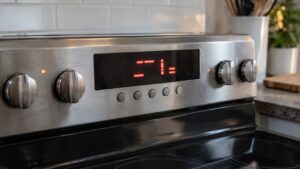
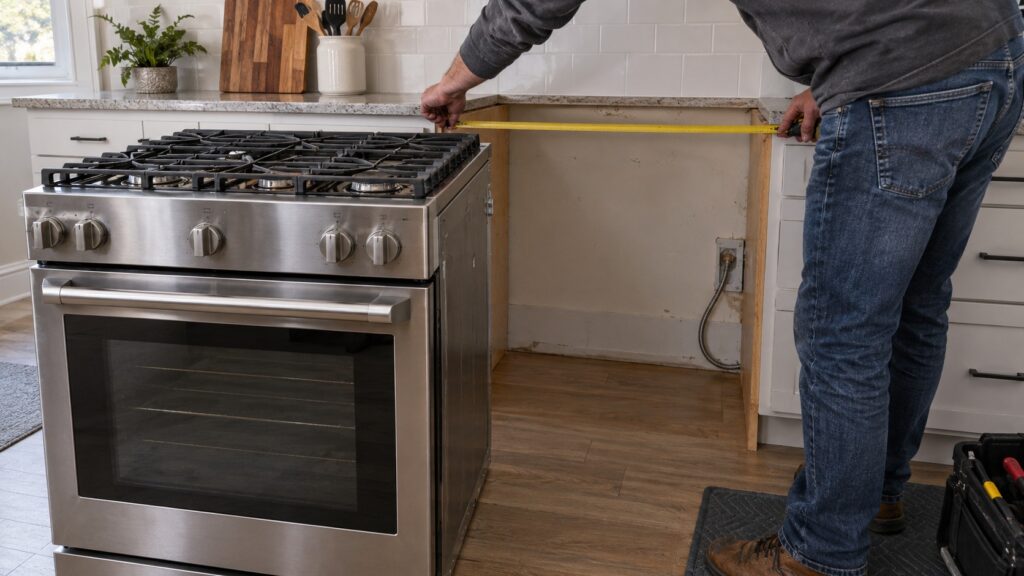
If your appliance is on a list of KitchenAid discontinued models, it does not mean the appliance has stopped working, and it does not mean you must replace it. Discontinued only means the model is no longer built. The real questions are whether parts for it are still available and, if it does need replacing, which current model fits the same opening. Match the width, height and depth of the cutout first, the fuel type and the hookups second, and the look of the finish last.
What does discontinued actually mean for a KitchenAid appliance?
Manufacturers retire models every year as new series arrive. A model that has left the showroom floor can still be in thousands of kitchens, and a well-kept range or wall oven often runs for many years after its last production date. Two separate questions follow from that. One is whether the appliance can still be repaired, which depends on whether its parts can still be sourced. The other is what you would buy if it cannot.
For many discontinued KitchenAid models, common repair parts such as igniters, sensors, door locks and control boards stay available for years after production ends, but not for every part and not forever. A technician who works on these models every week knows which parts are easy to get and which ones are becoming scarce, so ask before you assume the answer is replacement. Our warranty check before repair or replace guide is a good first stop if the appliance is relatively new.
How do you find out whether your KitchenAid model is discontinued?
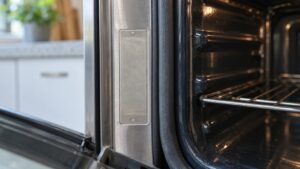
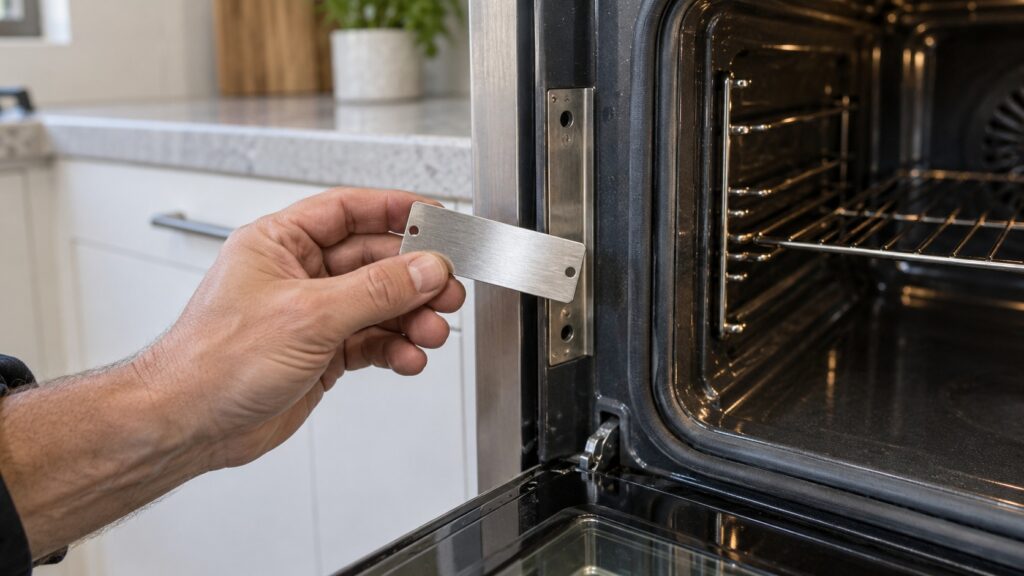
Start by reading the model number from the rating tag. The tag is not on the front, so look in the right place for each type:
- Ranges: on the frame behind the storage drawer or the oven door, or on the side of the oven opening.
- Wall ovens: on the front frame when the door is open, or on the side of the cavity.
- Cooktops: underneath, which means you may have to read it from the installation paperwork or from the cabinet below.
- Refrigerators: inside the fresh food compartment, usually on the upper left or right wall.
- Dishwashers: on the edge of the door frame or the inner tub rim.
Then compare the number with the current catalog and with a technician’s parts system. If a model number is not offered for sale and has no recent replacement part listings, treat it as discontinued. Our guide to reading a KitchenAid model number explains what the letters and digits tell you about the product line, size and finish, which helps when you compare it with a new model.
What should you match when you replace a discontinued range?
Ranges are the easiest appliance to replace and the easiest to get wrong. Work through these points in order:
- Type of range. A freestanding range has finished sides and a back guard and stands alone. A slide-in range sits between cabinets, overlaps the countertop edge and has controls on the front. They are not interchangeable without changes to the countertop.
- Width. Thirty inches is the usual width, but 36 and 48-inch ranges exist. Measure the opening between cabinets, not the old appliance.
- Fuel type. Gas needs a gas line and a regulator, electric needs a 240-volt circuit, and a dual-fuel range needs both. Our guide to choosing the right KitchenAid range fuel type compares them.
- Vent and clearance. Check the distance to the hood or microwave above and to the cabinets beside the cooktop.
- Anti-tip hardware and floor. Every range needs an anti-tip bracket, and a new model may mount in a slightly different position.
How do you match a discontinued built-in appliance?
Built-in wall ovens, cooktops, microwaves and refrigerators sit in a custom cabinet opening, and that opening does not change when the appliance does. Measure the width, the height and the depth of the cutout, and compare them with the cutout dimensions printed in the installation instructions of the model you are considering. Pay attention to a few details that often cause trouble:
- Wall ovens: A single oven may not fit a cutout built for a double or for a combination microwave and oven. Check the cutout height, and check where the electrical connection sits behind it.
- Cooktops: The cutout width and depth must match, and the clearance below the cooktop for the underside and the wiring matters as much as the top dimensions.
- Built-in refrigerators: The case depth, the door swing and the opening height decide whether it fits. See our comparison of built-in versus freestanding refrigerators before you commit.
- Dishwashers: Most are a standard 24 inches wide, but the height under the counter and the position of the water and drain connections vary.
If a new model is a quarter inch smaller than the old one, trim kits and filler panels can sometimes close the gap. If it is larger, the cabinet has to be modified, and that is a carpentry job and not an appliance swap.
When is repairing a discontinued model the better choice?
Repair makes sense when the fault is a common wear part, the cabinet fit is exact, and the appliance otherwise works well. A new model may arrive with different controls, a different cutout and a bigger price than the repair, plus the cost of any carpentry or countertop work that goes with it. Replace when the repair needs several major parts at once, when a key part cannot be sourced at all, or when the appliance is old enough that other components are wearing out too. Our KitchenAid range repair or replace guide walks through the decision for ranges in more detail.
A technician can tell you in a single visit whether the parts you need are available. Our KitchenAid range repair team can confirm the model, check the parts position and give you a clear recommendation before you spend anything on a replacement. We are an independent repair company, not a factory service arm, and we will tell you when a repair is not worth doing. When you are ready, book a visit and have the model number from the tag ready.