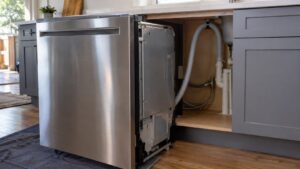
This guide explains the Kitchenaid Dishwasher 6-2 Error: what it means, what causes it, and how to resolve it safely.
Understanding the Kitchenaid Dishwasher 6-2 Error
Below, our specialists break down everything you need to know about the Kitchenaid Dishwasher 6-2 Error.
Understanding the Kitchenaid 6-2 Error
Below, our specialists break down everything you need to know about the Kitchenaid 6-2 Error.
What 6-2 means on your KitchenAid dishwasher
Every KitchenAid dishwasher includes a small plastic float in the tub whose only job is to rise if the water level gets dangerously high, tripping a switch that tells the control board to shut off the fill valve immediately. When that float or its switch senses an overflow condition, the machine displays the 6-2 code and halts everything until the excess water is dealt with. This is a flood-prevention feature working as intended, not a random glitch, so it deserves to be taken seriously rather than reset away without investigation.
The KitchenAid 6-2 error can mean there really is too much water sitting in the tub, or it can mean the float itself is stuck and reporting an overflow that isn’t actually happening. Because standing water is often visible the moment you open the door, most homeowners can tell fairly quickly which scenario they’re dealing with, but either way the fix starts with getting that water safely out before anything else is tested.
Symptoms
- Standing water visible in the tub when the door is opened
- Cycle stops abruptly with a repeating 6-2 code on the display
- Water continues trickling in even after the cycle has stopped
- Puddling or dampness on the floor around the base of the dishwasher
- Problem returns immediately after a breaker reset without the water being removed first
Common causes
- Food debris or a dropped utensil has jammed the plastic overflow float in its down position, so it can’t rise even though the water is genuinely too high
- The water inlet valve solenoid has failed in the open position, letting water keep flowing into the tub even after the control board sends the signal to stop
- The microswitch that the float triggers has failed while stuck in the “triggered” state, reporting an overflow even when the actual water level is completely normal
Troubleshooting steps you can try
- Before touching anything inside the tub, shut off the water supply valve under the sink so no more water can enter the dishwasher regardless of what the inlet valve is doing.
- Open the door and use towels or a wet-dry vacuum to remove as much standing water from the tub as you can; work carefully since the tub may be full closer to the door seal than expected.
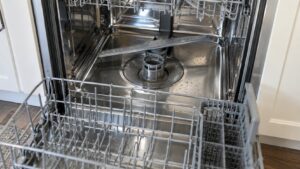
- Once the water is cleared, find the plastic dome-shaped float, usually in the front-left corner of the tub floor, and try lifting it gently by hand — it should move up and down freely with no resistance or grinding.
- If the float was stuck, check underneath and around it for trapped food chunks, broken glass, or a fallen utensil, and clear any obstruction you find.
- With the tub empty and the float moving freely, reset the dishwasher at the circuit breaker and let it run a drain cycle before reopening the water supply valve and attempting a short test wash.
When to call a technician
Schedule an experienced technician for your dishwasher when:
Still seeing 6-2 on your dishwasher? That points to a repair best left to a professional. Request a technician online, explore our error-code library, or visit kitchenaid.com for model information.