TL;DR: A KitchenAid ice dispenser chute is a small passage that sees a lot of mess. Every glass you fill leaves drips, splashes and a film of sugary residue, and the melted ice that follows can refreeze into a clump that jams the next scoop. Wipe the chute and the recess with warm soapy water and a soft cloth every few weeks, dry them completely, keep the freezer cold enough, and never chip ice out with a knife or screwdriver.
Why does the ice dispenser chute get dirty so fast?
The chute is the one place where food-grade ice, tap water and the room air all meet. Each time you fill a glass, a few drops fall onto the chute walls. Drinks splash, sugary soda leaves a film, and when the dispenser flap closes, small amounts of water are trapped behind it. At freezer temperatures that water turns into a thin glaze, and ice sliding down the chute catches on the glaze and starts to cling. Over weeks, a bit of grime, a bit of ice and a bit of moisture combine into the slow dispenser that people often mistake for a broken motor.
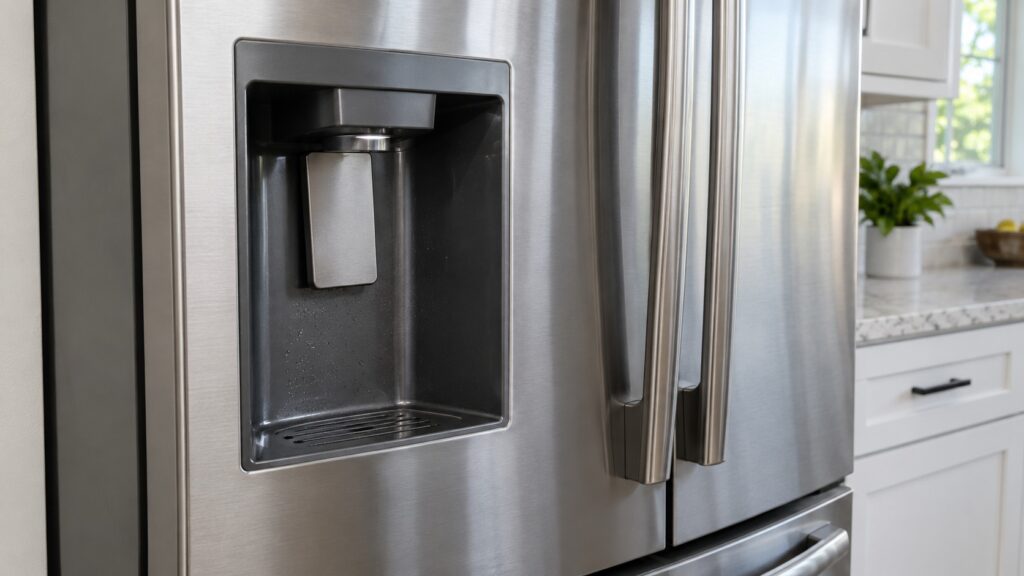
On a model like the KRMF436SPS, which delivers water and ice from the front of the door, that exposure happens at the exact spot you use most. It is a care issue far more often than a repair issue, and the cure costs nothing but a damp cloth.
How do you clean the chute safely?
Use gentle products and a gentle touch. A soft cloth, warm water and a drop of mild dish soap are all you need.
- Empty the bin of any ice sitting in or near the chute, and discard it. Ice that has been sitting next to a dirty chute has already picked up its flavor.
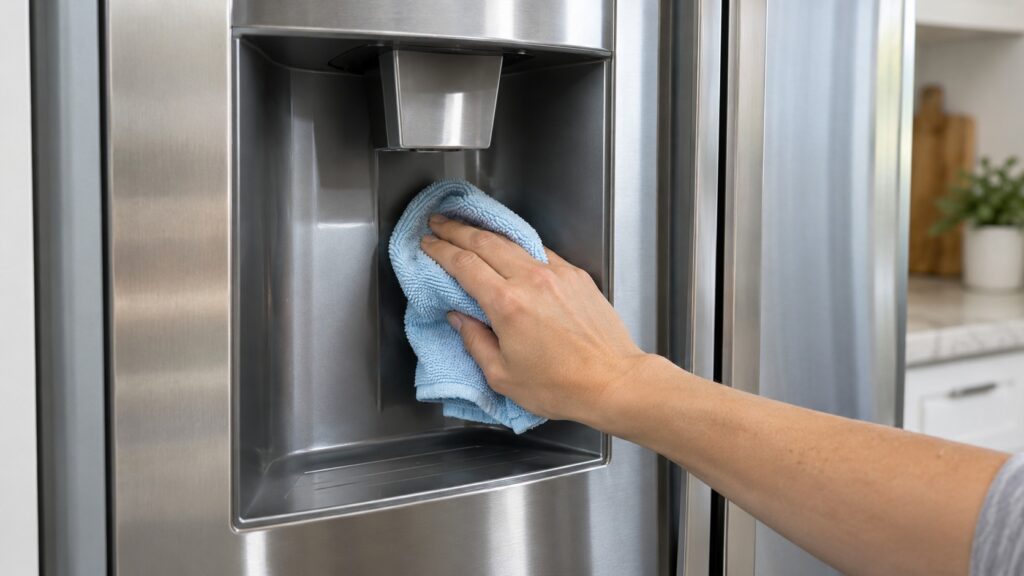
- Dampen a soft cloth with warm soapy water and wipe the dispenser recess, the chute opening and the flap you can reach. A cotton swab handles the corners.
- Wipe again with a cloth dampened with clean water to remove soap residue, which otherwise leaves a film of its own.
- Dry everything with a clean towel. This step prevents refreezing.
- Leave the door closed and let the first few scoops of ice run through before you serve it to anyone.
Never reach into the chute with a hand or a tool while the dispenser is operating, and do not force the flap. Skip abrasive pads and strong cleaners; they scratch plastic and leave odors that ice picks up. For the stainless exterior around the dispenser, our guide to cleaning PrintShield stainless steel gives the right method.
What stops ice from clumping and sticking?
Clumps form when ice partly melts and refreezes. These habits keep it from happening:
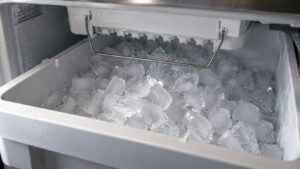
- Use the ice. Ice that sits for weeks in a bin tends to fuse. If you rarely drink ice, scoop out and discard the bin’s contents occasionally so new ice replaces it.
- Keep the freezer at its proper temperature. If the freezer runs warm, ice softens and sticks. A freezer thermometer reading well above 0 degrees Fahrenheit is worth investigating.
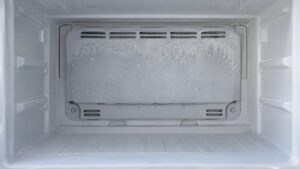
- Close doors fully. A door left slightly ajar lets humid air in, which frosts the flap and chute. Check that nothing, including a tall bottle, is holding the freezer door open.
- Do not overload the bin area with frozen items that block the ice path.
The same habits apply to a separate undercounter unit. Our KitchenAid ice maker tips and the ice maker maintenance guide go deeper on bins and filters, and the clear versus nugget ice maker comparison explains why different ice types behave differently in a chute.
Does the water side of the dispenser need the same care?
Yes, though it asks less of you. The water spout and the drip tray below it collect mineral spots and mildew if they stay damp, so wipe the tray when you wipe the chute and lift out any removable grille to rinse it. If the water tastes flat or the ice smells, the usual culprit is an old water filter and not the dispenser, so check the replacement reminder. After you change a filter, run a few glasses of water through the dispenser to clear trapped air, and discard the first batch of ice. Air in the line can make the stream sputter for a minute or two, which is normal and should settle quickly.
When is a sticking dispenser a technician problem?
If a clean, dry chute, a cold freezer and fresh ice still do not fix it, the cause lies deeper. Watch for these signs:
- The dispenser makes a motor noise but no ice comes out.
- Ice appears only occasionally, or the flap stays open or stuck.
- Ice forms solid in the chute again within a day of cleaning.
- Water leaks from the dispenser area or the display shows an unreadable fault code.
Those point to a door seal problem, a frozen ice path, a failing dispenser mechanism or a fault in the ice maker itself. Start with ice maker not making ice to rule out the simple causes, then ask for help. Our KitchenAid refrigerator repair technicians can inspect the dispenser, and you can book a visit when you are ready.