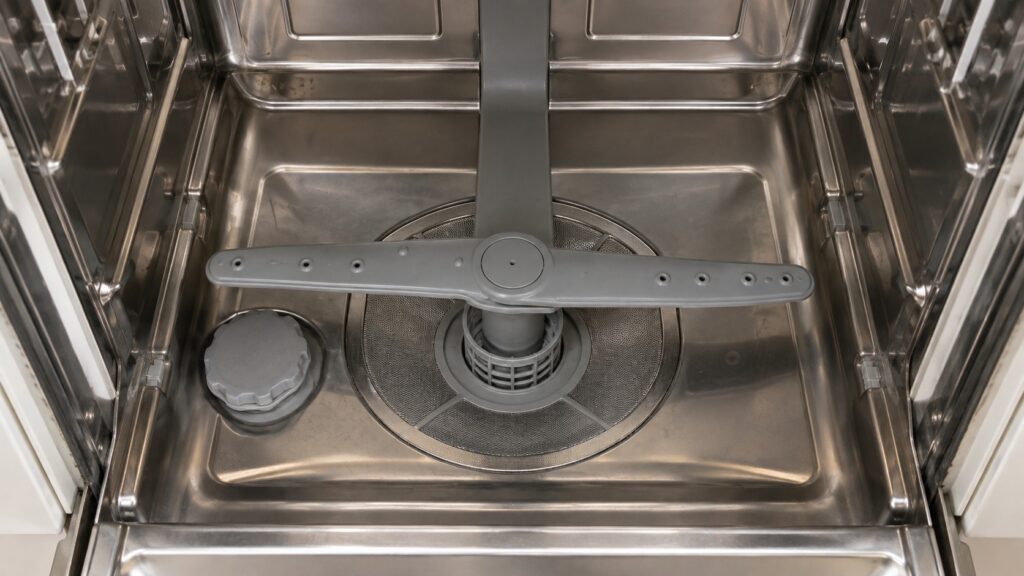
Cleaning KitchenAid dishwasher spray arms is the maintenance job with the best return and the lowest profile: nobody thinks to do it, it takes fifteen minutes, and it fixes more “the dishwasher stopped cleaning” complaints than any part we fit. A dishwasher does not scrub — it aims water — so anything that changes where the water goes changes the result. This guide covers the arms, the third rack jets and the sump, and what a blocked one actually looks like from the outside.
Reading the symptom before you start
Where the dishes stay dirty tells you which part of the spray system is failing. One rack dirty and the others clean points at that rack’s arm or jets, or at the diverter that routes water between them. Everything gritty points at the filter, because the machine is recirculating what it should be trapping. A film on glassware is water chemistry rather than spray at all.
Start with the pattern, and then clean the whole system anyway — it is quicker than isolating a single fault, and the parts you clean today are the ones that would have blocked next month.
Taking the arms off
Pull the lower rack out and lift or unscrew the lower arm; most release with a gentle turn of the retaining nut, and it is worth noting which way round it sat before it comes off. The upper arm usually releases with a quarter turn of a collar. If anything resists, stop and look for a clip rather than applying force — plastic arms crack, and a cracked arm sprays sideways.
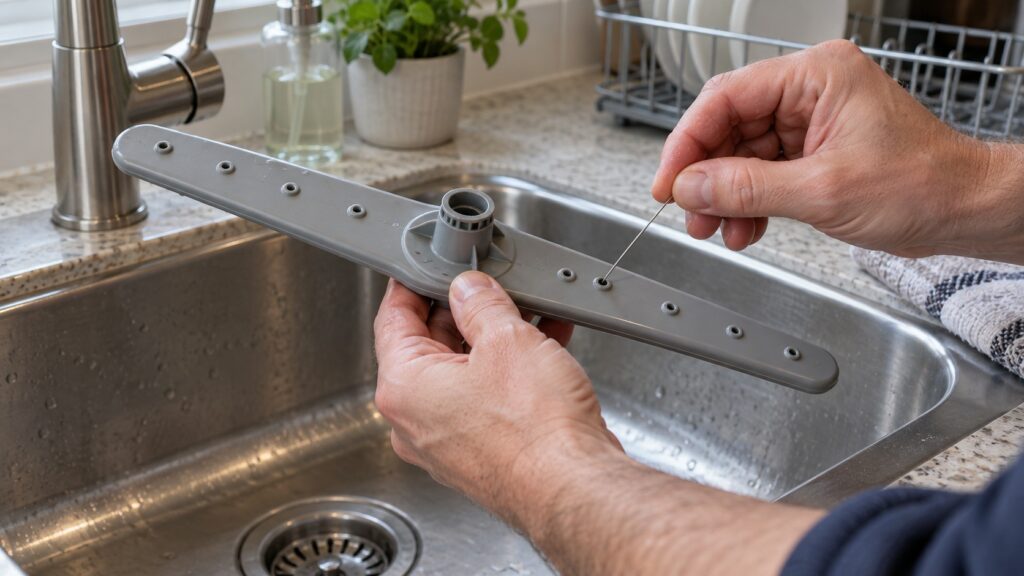
Rinse each arm under the tap, then hold it up to the light and look through every jet. Clear the blocked ones from the outside with a straightened paper clip or a thin wire. Do not use a toothpick, which snaps off inside and leaves a blockage you cannot see, and do not enlarge a jet with a drill — the hole sizes are deliberate and they set the spray pattern.
The third rack is the one that gets forgotten
A shallow top rack is fed by its own small jets, often in a bar along the back or through the upper arm’s outer ring. Those openings are the smallest in the machine and the first to block with a fragment of label or a seed.
Check them with the rack removed and the light behind them. While the rack is out, look at its runners and rollers too: a rack that does not sit level can foul the arm below it, and an arm that cannot spin freely cancels a whole quadrant of the wash.
Filter and sump, on the same schedule
The filter and the arms are one system. A filter that is passing debris blocks the jets; jets that are blocked leave soil on dishes that lands back in the filter. Cleaning one and not the other is why the problem comes back.
While the arms are out, look at the tub itself. The two places worth a wipe are the area around the sump, where a film of grease collects and slowly feeds the filter, and the underside of the door above the seal, where detergent residue builds into a crust that holds moisture against the gasket. Neither affects the spray directly, and both shorten the life of parts that are expensive to replace.
Putting it back
Refit each arm the way it came off and check it spins freely through a full turn with a fingertip. Run an empty hot cycle with a machine cleaner if the machine has been neglected, then run a normal load and look at the results before deciding anything else is wrong.
If one rack is still dirty with clean arms and a clean filter, the diverter is the next suspect rather than the pump — the part that routes water between arm groups, and the one that produces exactly this symptom. Our guide on drainage problems covers the neighboring symptom, and the vocabulary is in our dishwasher glossary.
Habits that keep it clean
Scrape plates rather than rinsing them — modern sensing cycles need some soil to read, and a rinsed load can be under-washed. Keep labels and produce stickers out of the machine, since they are the classic jet blocker. Load so that nothing protrudes below a rack to foul the arm underneath, and check the arm spins before you close the door. The wider routine is in our guide on dishwasher maintenance.
One habit prevents most of this work: scrape rather than rinse. Sensing cycles read how dirty the water is, so a load rinsed spotless before it goes in can be under-washed, while large scraps are exactly what blocks jets and packs a filter. Scrape solids into the bin, leave the rest, and the machine gets both the soil signal it needs and none of the debris it cannot handle.
When to call
Call when a rack stays dirty after the arms and filter have been cleared, when an arm will not spin freely, when an arm is cracked, or when the machine is noisy in a new way during the wash. Diverters, wash pumps and heaters need the machine pulled out and the panel off, and a leak from a cracked arm bearing can reach the cabinetry.
We are an independent repair company and not a factory service arm. Pricing starts from a diagnostic visit, and we confirm the estimate before any work begins. KitchenAid dishwasher repair covers spray arms, diverters, pumps, filters and controls, and you can schedule a visit online.