A KitchenAid dishwasher not drying is one of those complaints where the appliance is often innocent and the cause is a two-dollar consumable. It is also, occasionally, a genuine heating fault that is quietly hurting the wash as well. This guide separates the two, starting with the checks that cost nothing and ending with the ones that need a technician.
Start with rinse aid, every time
Rinse aid is what makes water sheet off a surface instead of beading on it. Without it, every droplet has to be evaporated where it sits, and no drying system can keep up. An empty dispenser is the most common single cause of drying that has faded over a few weeks.
Open the door, find the dispenser beside the detergent cup, and look at the indicator. Fill it, set the dosage toward the higher end in hard water, and run a normal cycle before judging anything else. If drying improves, the investigation is over.
Then look at the cycle and the options
Short and eco cycles save energy by using less heat, and less heat means less drying. If the household has switched to a quick cycle to save time, wet dishes are the expected outcome rather than a defect. Check whether a heated-dry or extended-dry option exists and is switched on.
Sensing cycles complicate this in a useful way: they adjust to the load, so a lightly soiled load may get a cooler, shorter treatment and dry less well than a heavy one. That is the machine being efficient, and our guide on how sensing cycles work explains the logic.
Loading: the free improvement
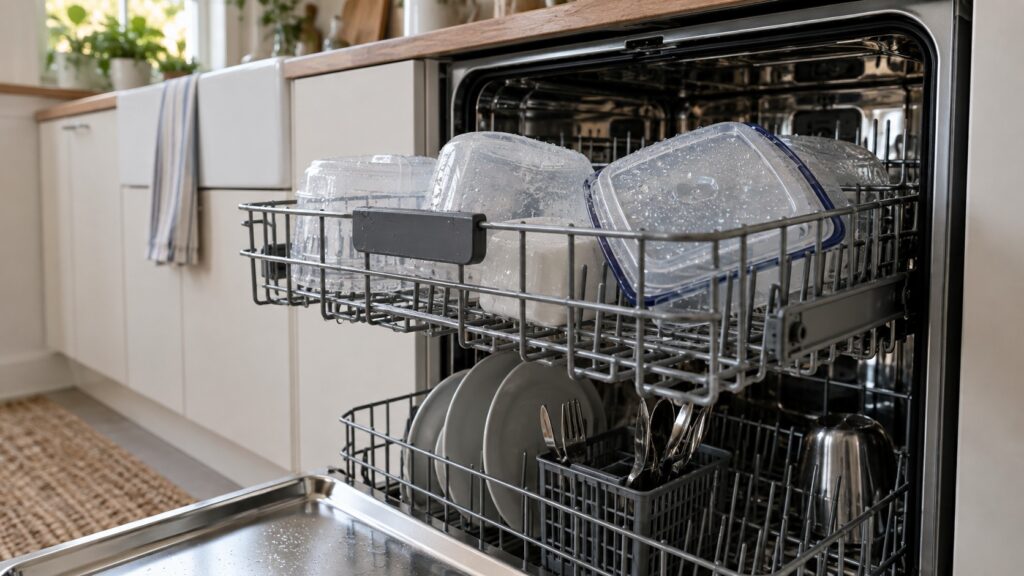
Water sits where gravity tells it to. Cupped mug bases, upturned container lids and bowls stacked flat all hold a pool that no drying system will remove. Tilt them. Put plastics on the upper rack, leave space between items so air can reach them, and avoid packing the racks edge to edge.
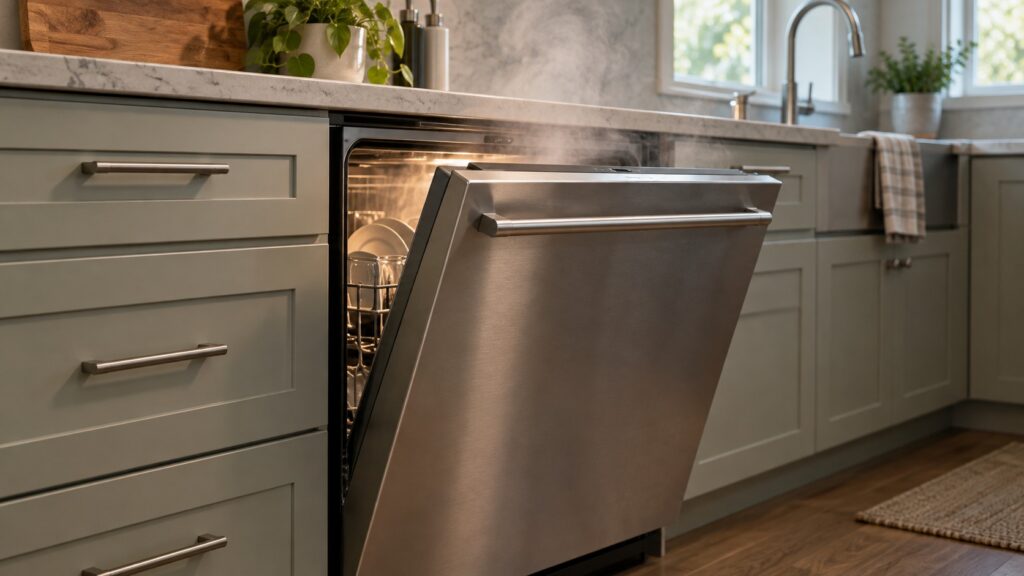
Then use the door. Cracking it open a few inches at the end of the cycle and waiting ten minutes lets the last of the humid air escape rather than re-condensing on everything as the tub cools. On a machine with passive drying this is the difference between damp and dry; on one with active drying it is still worth doing.
Is the machine actually getting hot?
Open the door carefully a minute after a cycle ends and feel the inside of the door and a plate on the lower rack. Genuinely hot means the heating circuit is doing its job. Barely warm means it is not, and that is a service call rather than a habit change.
The other checks worth doing
Clean the filter: a blocked filter recirculates soil, which makes a sensing cycle run longer and hotter and confuses the whole picture. Check the spray arms spin freely and that their jets are clear, because a load that was not rinsed properly does not dry properly either.
Look at the vent path at the top of the door for a crust of detergent residue, and at the door gasket for a section that has flattened. Both let moist air out during the cycle and cool air in at the end — our guide on dishwasher maintenance covers both jobs.
One more check belongs here because it is invisible from the kitchen: incoming water temperature. A dishwasher heats water, but it starts from whatever the tap gives it, and a machine fed from a long cold run or a water heater set low spends much of the cycle catching up. Running the kitchen tap hot for a few seconds before starting a cycle is a genuinely useful habit in houses where the heater is far from the kitchen.
What not to do
Do not run an extra cycle to “dry things off” — it adds water, not heat, and ends with the same problem plus a wasted hour. Do not pack the machine tighter to make up for wet dishes; airflow is exactly what is missing. And do not switch to a stronger detergent expecting better drying, because detergent washes and rinse aid dries, and the two jobs are not interchangeable.
If the machine is new to the house, give it a few loads before judging. Every dishwasher dries differently, and the habits that worked on the last one — the cycle, the detergent, the loading pattern — may need adjusting rather than replacing. That is not a fault, and it is the most common reason a perfectly good machine gets a service call in its first month.
One more thing worth checking before you book anything: the door gasket and the vent path at the top of the door. Steam escaping mid-cycle takes the heat the drying depends on, and a flattened section of gasket or a crust of detergent residue across the vent is enough to do it. Both are visible with the door open and a flashlight, and both are cheap to put right compared with the heating circuit everybody suspects first.
When to call
Call when the tub is cool at the end of a cycle, when heavy ceramics come out wet, when a heating-related code appears, or when drying has stopped suddenly rather than fading. A dishwasher that cannot heat its water is washing worse than you think, so this is not a complaint worth living with — and the wider decision about an aging machine is covered in our guide on repair or replace.
We are an independent repair company and not a factory service arm. Pricing starts from a diagnostic visit, and we confirm the estimate before any work begins. KitchenAid dishwasher repair covers heating elements, thermistors, vents, fans and controls, and you can schedule a visit online.