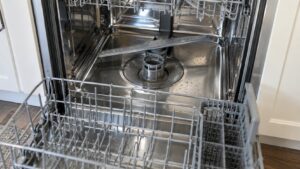
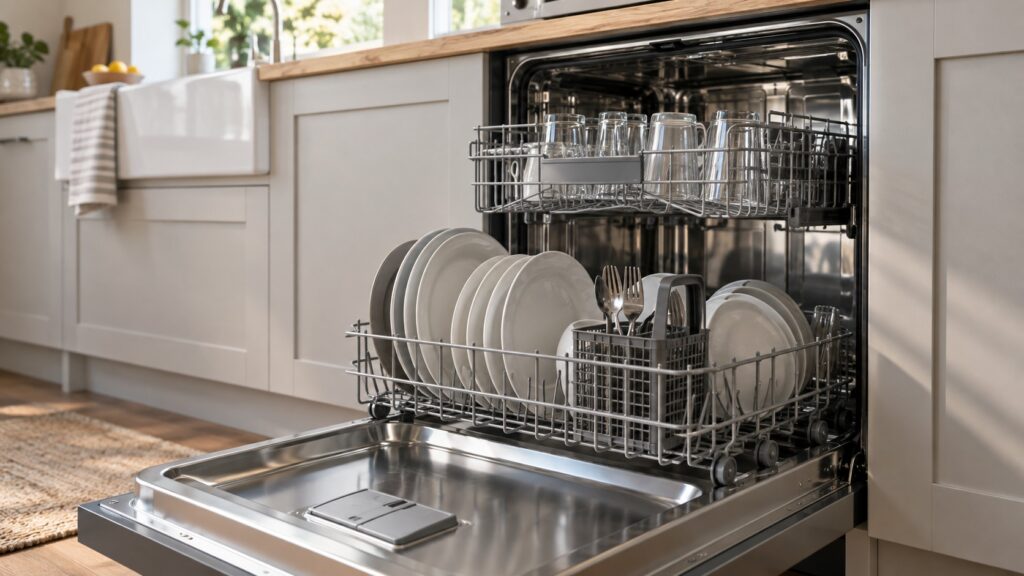
KitchenAid ProDry is the system that decides whether your storage containers come out ready to put away or ready to towel off. Drying a dishwasher load is a harder engineering problem than washing one, and the approaches differ enough between machines that two dishwashers washing identically can dry very differently. This guide explains what the system does, why plastics are the hard case, and what to check when drying degrades.
Why drying is harder than washing
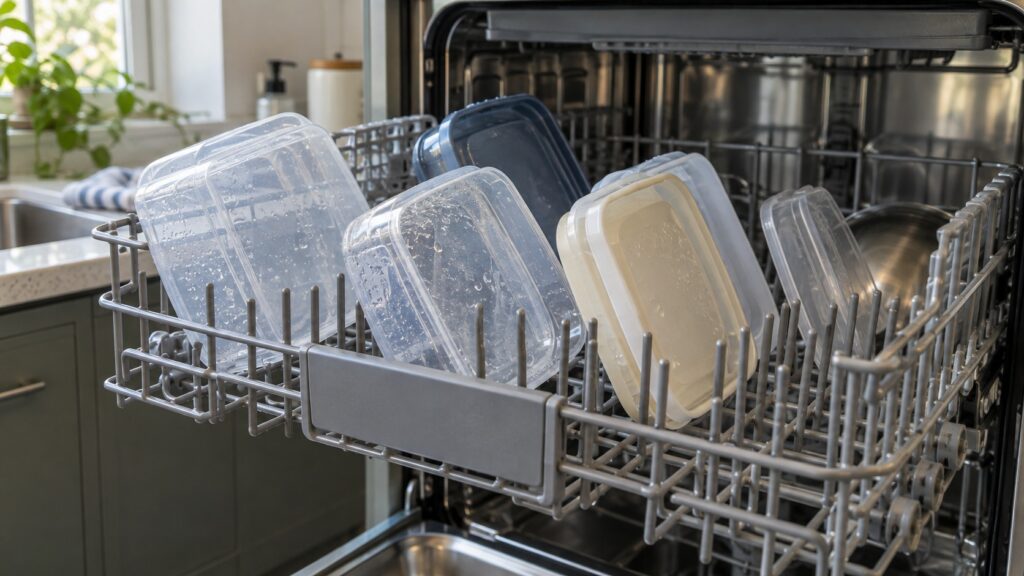
Washing is mechanical: water, detergent, pressure, time. Drying is thermodynamic, and it comes down to how much heat is stored in the load and how easily water leaves a surface. Heavy ceramic and glass hold a lot of heat and dry themselves. Thin plastic holds almost none, cools within seconds of the cycle ending, and keeps every droplet on its surface.
That is why “the dishwasher does not dry” is nearly always a complaint about plastics. If your plates and glasses come out dry and your containers do not, the machine is working as designed and the physics are doing what physics does.
What the system adds
Active drying moves warm air through the tub after the final rinse rather than leaving the load to cool in still, saturated air. Two things change. Water evaporates faster because moving air carries vapor away from the surface, and the moist air is replaced rather than sitting there re-condensing on everything as the tub cools.
The result is a machine that handles plastics noticeably better than a passive design — not perfectly, because a thin lid with a cupped rim will still hold a puddle, but well enough that a normal load comes out ready to put away.
Rinse aid is not optional here
Every drying system on every dishwasher assumes rinse aid. Without it, water beads on surfaces and each bead has to be evaporated individually; with it, water sheets off and carries itself down the drain before drying even begins.
Check the dispenser monthly. If drying has degraded over weeks rather than suddenly, an empty dispenser is the first suspect and the cheapest fix in this entire guide. If you have switched to an all-in-one detergent tablet that claims to include rinse aid, be aware that results vary a great deal by water hardness — in hard water, separate rinse aid usually still wins.
Loading decides more than owners think
That last line is the only piece of advice in this guide that improves on the appliance itself. Whatever the drying system, opening the door at the end of the cycle and waiting ten minutes before unloading gets you the driest load the machine is capable of.
When drying genuinely fails
Three patterns mean something is wrong rather than misunderstood. Everything comes out wet, including heavy ceramics — that points at heat, so the heating element or the sensing behind it. The interior is hot but everything is soaked — that points at venting or at rinse aid. And drying that fails only on long cycles, or only in a cold kitchen, usually points at a heating fault that shows up under load.
A heating problem often shows itself elsewhere too: poor cleaning results on a sensing cycle, since the same element brings the wash water up to temperature. Our guide on dishes that come out wet walks the checks in order, and the terms are defined in our dishwasher glossary.
Condensation drying — the approach used by many European machines, where a stainless tub is cooled by the surrounding air so moisture condenses on the walls rather than on the dishes — is worth knowing about as a comparison. It is quiet and gentle and it works well on ceramics; it needs no fan and no extra heat. Active systems get plastics drier and get everything drier faster, at the cost of a little more energy per cycle. Neither is wrong, and if you have moved between the two you will notice the difference immediately on a load of containers.
Keeping it working
Clean the filter monthly, keep rinse aid topped up, run a machine cleaner in hard water, and check that the vent path at the top of the door is not blocked by a build-up of detergent residue. None of it takes long, and it is the routine in our guide on dishwasher maintenance.
Hard water deserves a final word. Minerals left behind as water evaporates show up as spots and film, which owners often describe as “not drying” when the dishes are in fact dry and marked. The cure there is rinse aid, a water softener where the house has one, and a machine cleaner run periodically — not more heat.
If you have just moved into a house with an unfamiliar machine, give the drying a fair test before judging it: rinse aid topped up, a normal cycle rather than a quick one, plastics on the top rack and angled, and the door cracked at the end. Half the complaints we hear about a dishwasher that “never dries” come from a machine that has never been run the way it was designed to run, and that test costs one load to settle.
When to call
Call when heavy items come out wet, when the interior is cool at the end of a cycle, when a heating fault code appears, or when drying has degraded suddenly rather than gradually. A heating element and its sensing are not owner-serviceable, and a machine that cannot reach temperature is washing badly as well as drying badly.
We are an independent repair company and not a factory service arm. Pricing starts from a diagnostic visit, and we confirm the estimate before any work begins. KitchenAid dishwasher repair covers heaters, fans, sensors, pumps and controls, and you can schedule a visit online.